


How to Protect Yourself from Microplastics
Microplastics are everywhere, in the air you breathe, the food you eat, and even the water you drink. A study published in the journal PLOS estimates that humans may inhale as many as 68,000 tiny plastic particles each day. Even more concerning, scientists have found microplastics in human organs, including the lungs and blood.
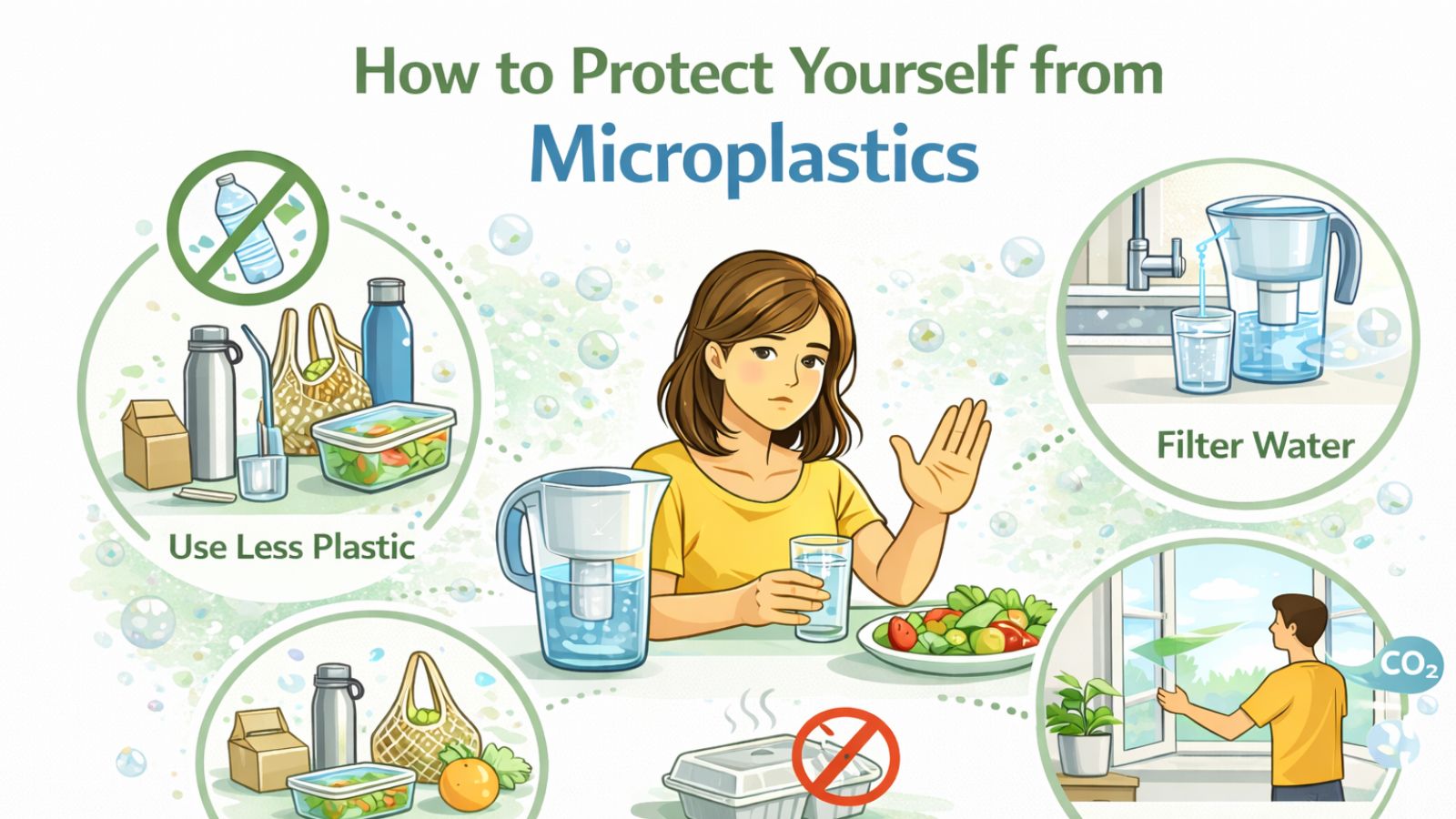
You can protect yourself from microplastics by reducing plastic use, avoiding heating food in plastic, improving indoor air quality, and choosing natural materials.
Understanding how to protect yourself from microplastics is essential for long-term health. In this blog, you’ll learn simple, practical steps to reduce your daily exposure and create a safer, healthier environment for yourself and your family.
What Are Microplastics?
Microplastics are very small pieces of plastic, usually smaller than 5 millimetres. Many are so tiny that you can’t even see them with your eyes. Some are even smaller, called nanoplastics, which are almost microscopic.
These particles come from two main sources. Some are made small on purpose, like tiny plastic beads used in cosmetics and personal care products. Others come from bigger plastic items, such as bottles or bags, that slowly break down into smaller and smaller pieces over time.
According to the United Nations Environment Programme (UNEP), humans have produced more than 8.3 billion tonnes of plastic since the 1950s. Because of this massive amount, plastic has spread everywhere, into our air, water, soil, and even our bodies.
Tips To Protect Yourself from Microplastics
The thing is that you cannot completely avoid microplastics, but you can significantly reduce your exposure by making small daily changes.
Here is how to protect yourself from microplastics in simple ways:
Filter Your Drinking Water
One of the best and easiest changes you can make is to switch from bottled water to filtered tap water.
According to Science Daily, people who drink bottled water can take in up to 90,000 more microplastic particles each year compared to those who drink tap water. So, this simple change can make a big difference.
Choose a good water filter, such as a reverse osmosis system or a carbon filter, as these can remove most microplastics from your water.
At the same time, you will also reduce plastic waste, which is better for both your health and the environment.
Avoid Plastic Food Containers
Plastic food containers can release tiny plastic particles and harmful chemicals into your food, especially when heated. The risk increases when you microwave food in plastic or store hot, acidic foods in it.
Use safer options instead:
- Glass containers for storing and reheating food
- Stainless steel lunchboxes and water bottles
- Ceramic plates and bowls for daily use
Always avoid heating food in plastic. Transfer it to a glass or ceramic container before microwaving.
Choose Natural Fibre Clothing
Clothes made from synthetic materials like polyester, nylon, and acrylic release tiny plastic fibres, especially when washed. In fact, a single wash can release over a million microplastic fibres, making clothing a major source of exposure at home.
What you can do:
- Choose natural fabrics like cotton, wool, hemp, or silk
- When washing synthetic clothes, use a laundry filter bag or a Cora Ball to catch fibres
- Wash clothes on shorter, cooler cycles to reduce fibre release
- Buy fewer clothes and consider second-hand options
Small changes in what you wear and how you wash your clothes can help reduce your exposure to microplastics.
Reduce Single-Use Plastics
All plastic eventually breaks down into tiny microplastics. So, using less plastic is one of the best ways to reduce your exposure and protect the environment.
Simple changes you can make:
- Use a reusable water bottle instead of buying plastic bottles
- Carry reusable shopping bags
- Avoid plastic straws and use metal, glass, or bamboo ones instead
- Bring your own coffee cup when buying drinks
- Choose products with paper, cardboard, or glass packaging instead of plastic
Small everyday changes can make a big difference in reducing microplastics.
Use Plastic-Free Cosmetics
Many personal care products contain tiny plastic particles. These are often found in face scrubs and toothpastes. On labels, they may be listed as polyethylene (PE) or polypropylene (PP).
What you can do:
- Choose products that are labelled microplastic-free
- Look for brands that use natural ingredients
- Pick products with recyclable or eco-friendly packaging
- Check ingredient labels before buying
It only takes a few seconds to read labels, and it can help you avoid unnecessary microplastics.
Use an Air Purifier
Indoor air can sometimes be up to 5 times more polluted than outdoor air. That’s why improving the air in your home is very important for your health.
An air purifier with a HEPA filter can help remove tiny particles from the air, including microplastics, dust, and pollen. These filters are very effective and can trap 99.97% of particles as small as 0.3 microns, helping you breathe cleaner air indoors.
Use Public Transport
Car tyres release tiny plastic particles as they wear down while driving. These particles spread into the air, roads, water, and soil, contributing to microplastic pollution.
Using public transport, cycling, or walking can help reduce this pollution. It also reduces the number of cars on the road, leading to less tyre wear and fewer microplastics in the environment.
This is also good for your health and helps reduce air pollution and your carbon footprint.
How Do Microplastics Enter Our Bodies?
Microplastics can enter our bodies in three main ways: through the air we breathe, the food we eat, and the water we drink. Understanding these sources helps us reduce exposure.
Through the Air We Breathe
Indoor air can be more polluted than outdoor air, sometimes containing up to 5 times more pollutants (EPA).
Microplastics come from:
- Synthetic clothes and fabrics
- Furniture and carpets
- Laundry, which can release microplastic fibres per wash
We then breathe in these tiny fibres without realising it. Some may even carry harmful chemicals that can affect our health.
Through the Food We Eat
Microplastics enter food in many ways:
- Plants absorb them from contaminated soil
- Seafood contains plastic particles from the oceans
- Food packaging can transfer microplastics into food
According to American Chemical Society studies, people may consume around 39,000 to 52,000 microplastic particles per year through food alone.
Through the Water We Drink
Water is another major source of exposure.
- Bottled water drinkers may consume around 90,000 extra microplastic particles per year compared to tap water users
- According to the American Chemical Society, Overall exposure from food, air, and water can reach 74,000 to 121,000 particles annually
Conclusion
Learning how to protect yourself from microplastics may feel overwhelming because plastic is everywhere, and avoiding it completely is not possible. But the goal is not perfection; it is to reduce exposure in simple, practical ways.
Start with easy steps like filtering your water, avoiding plastic food containers, and keeping your home clean. Over time, add more habits such as choosing natural fabrics and eating less packaged food. Even small changes can make a real difference to your health.
If you want to take an extra step to improve your indoor air quality, an air purifier can help reduce airborne particles at home. Rensair air purifiers are designed for hospital-grade air cleaning and are a trusted option for homes, offices, and commercial spaces.
Frequently Asked Questions
You can reduce microplastics by using filtered water, avoiding plastic food containers, eating fresh food, choosing natural fabrics, and improving indoor air quality with regular cleaning and air purifiers.
There are no clear symptoms yet, but microplastics may be linked to breathing problems, inflammation, and organ stress. Research is still ongoing.
The biggest sources are the air we breathe, the food we eat (especially processed and seafood), and the water we drink, especially bottled water.
Air purifiers with HEPA filters can help reduce airborne microplastic particles, dust, and other pollutants, but they cannot completely eliminate exposure.
There is no proven way to fully remove microplastics from the body yet. However, eating a healthy diet with fibre, drinking filtered water, and reducing plastic exposure can help lower intake over time.