


Complete Guide to HVAC Energy Efficiency in Commercial Buildings
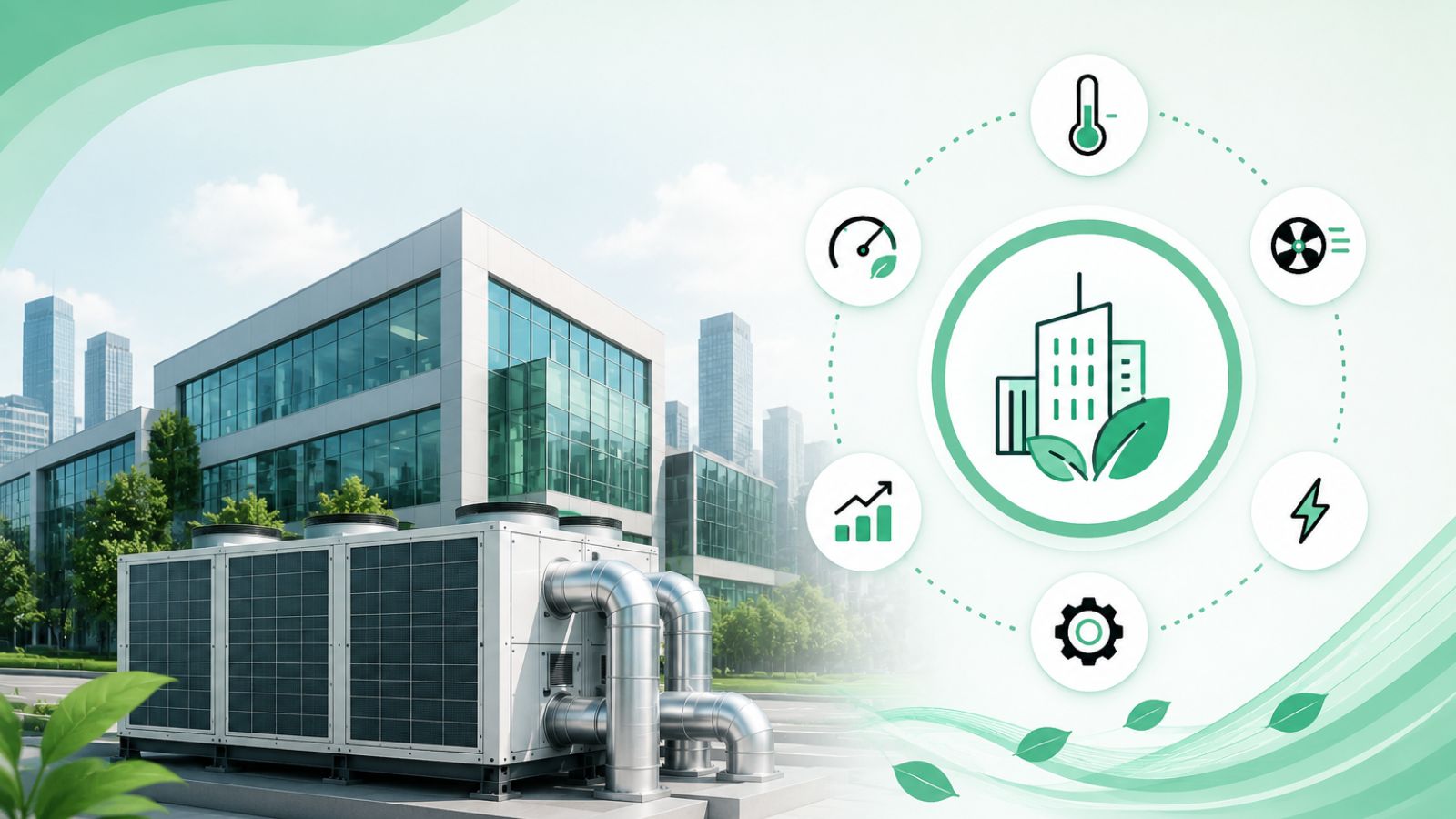
Did you know HVAC systems can account for nearly half of a commercial building’s energy use? While they keep offices comfortable and air clean, they can also be a major drain on energy bills. With the right strategies, you can reduce HVAC energy consumption, cut costs, extend equipment life, and improve overall comfort.
Commercial buildings rely on HVAC systems to maintain productive environments and good air quality, but heating, cooling, and ventilation remain some of the largest energy expenses for most facilities.
In this blog, we share practical, high-impact HVAC energy efficiency tips, including upgrading equipment, optimising controls, regular maintenance, sealing ducts, smart automation, and improving the building envelope, to help businesses save money, optimize operations, and make buildings more energy-efficient and sustainable.
Upgrade to Energy‑Efficient Equipment
Upgrading older HVAC equipment is one of the most effective ways to improve HVAC energy efficiency. Older systems often operate inefficiently because technology has improved significantly over the years.
- Modern HVAC systems are designed to use energy more efficiently. Replacing old chillers, boilers, packaged rooftop units, or air handling equipment with new high‑efficiency models can cut energy use by 20-40% or more. Modern units often have better ratings like SEER (Seasonal Energy Efficiency Ratio) and EER (Energy Efficiency Ratio), which tell you how much cooling you get per unit of energy used.
- Variable Speed Drives (VSDs) and Variable Refrigerant Flow (VRF) systems can adjust fan and compressor speeds to match actual demand, instead of always running at full power. This reduces wasted energy when a building doesn’t need maximum heating or cooling.
Optimise Temperature Settings and Controls
A small change to how your HVAC is controlled can deliver big savings:
- Programmable and smart thermostats let you schedule temperature changes throughout the day. For example, lowering heating or raising cooling setpoints when the building is unoccupied reduces wasted energy.
- Building Management Systems (BMS) or automatic controls can adjust HVAC operations in real time based on occupancy, outdoor weather, and indoor needs. These systems prevent the HVAC from running harder than necessary and help reduce HVAC energy consumption without sacrificing comfort.
- Zoning and occupancy sensors ensure that only occupied areas are heated or cooled, instead of conditioning the entire building at all times.
Keep Systems Well Maintained
Routine maintenance is one of the simplest yet most impactful ways to improve HVAC energy efficiency:
- Over time, dirt and debris accumulate on filters, coils, and moving parts. Clean components help the system work with less resistance, reducing energy use.
- Regularly replacing filters, checking refrigerant levels, inspecting motors and belts, and ensuring electrical components are functioning properly keep the system operating at peak efficiency.
According to Leaky’s, a well‑maintained commercial HVAC system can operate 10–25% more efficiently than one that’s neglected, because clean, correctly adjusted equipment works with less energy waste.
Many building operators schedule full HVAC check‑ups every 3–6 months, ensuring efficiency remains high year‑round.
Seal and Insulate Ductwork
Ductwork carries conditioned air throughout a building, but leaks and poor insulation can cause serious energy waste:
- Leaky ductwork can lose 20-30% of conditioned air, meaning the HVAC has to work harder to replace that lost cooled or heated air.
- Sealing gaps and cracks in ducts with proper materials (like mastic or metal tape) and adding insulation where ducts run through unconditioned areas (e.g., attics or outside walls) keeps more conditioned air where it’s needed.
This not only improves commercial HVAC energy savings but also enhances occupant comfort by delivering air more efficiently to all zones in the building.
Install Smart and Automated Controls
Smart controls go beyond simple thermostats by using data and automation to optimise HVAC operations:
- Building Management Systems (BMS) and smart sensors can automatically adjust temperature, airflow, and fan speeds based on actual usage and environmental conditions.
- These technologies can include CO₂ sensors that raise ventilation rates only when needed, or weather‑adaptive controls that reduce heating or cooling when outdoor conditions allow.
- Smart systems can also monitor performance in real time, spotting issues like abnormal energy use or equipment faults that might otherwise go unnoticed.
With automated control strategies, many buildings see 10-25% commercial HVAC energy savings compared to manual or static control systems.
Improve the Building Envelope
The building envelope is everything between the indoor and outdoor environment, including walls, roof, windows, doors, and insulation. Improving the envelope reduces the amount of heating or cooling your HVAC must provide:
- Good insulation slows heat flow into or out of your building. This means during summer, less heat enters, and the HVAC doesn’t have to work as hard; during winter, less heat escapes.
- A tight building envelope also reduces drafts and stops conditioned air from escaping – meaning the HVAC system spends more time efficiently maintaining comfort, not overcoming airflow losses.
In many buildings, envelope improvements are among the most impactful energy-saving strategies in buildings, because they directly reduce the core workload of the HVAC system itself.
Boost HVAC Efficiency with Rensair
For commercial buildings looking to reduce HVAC energy consumption and improve indoor air quality, the Rensair offers an innovative solution. Instead of replacing entire HVAC units, we “hack” existing systems by integrating cloud-connected technology, optimising ventilation based on occupancy, and reducing energy use.
This approach delivers significant commercial HVAC energy savings, lowers carbon emissions, and enhances air quality, all without costly system replacements.
Our solution works across offices, hospitals, universities, and other commercial spaces, combining smart controls, energy-efficient operations, and clean air filtration to make buildings more sustainable, cost-effective, and healthier for occupants.
Conclusion
Improving HVAC energy efficiency in commercial buildings saves money and helps the environment. By using modern equipment, smart controls, regular maintenance, and good practices, you can reduce HVAC energy consumption, lower costs, and make buildings more comfortable and eco-friendly.
Energy efficiency is not a one-time task; it needs ongoing attention. With the right approach, your building can run smarter, cost less, and provide healthier spaces for everyone inside.
Disclaimer: This blog is intended for informational purposes only. It provides general guidance on HVAC energy efficiency and should not be considered professional or technical advice. Always consult a qualified HVAC professional or energy consultant before making decisions or implementing changes in your commercial building.