6 Types of HVAC Systems Explained | Complete Guide
Have you ever wondered how your home stays warm in winter and cool in summer? It happens because of HVAC systems. HVAC stands for Heating, Ventilation, and Air Conditioning.
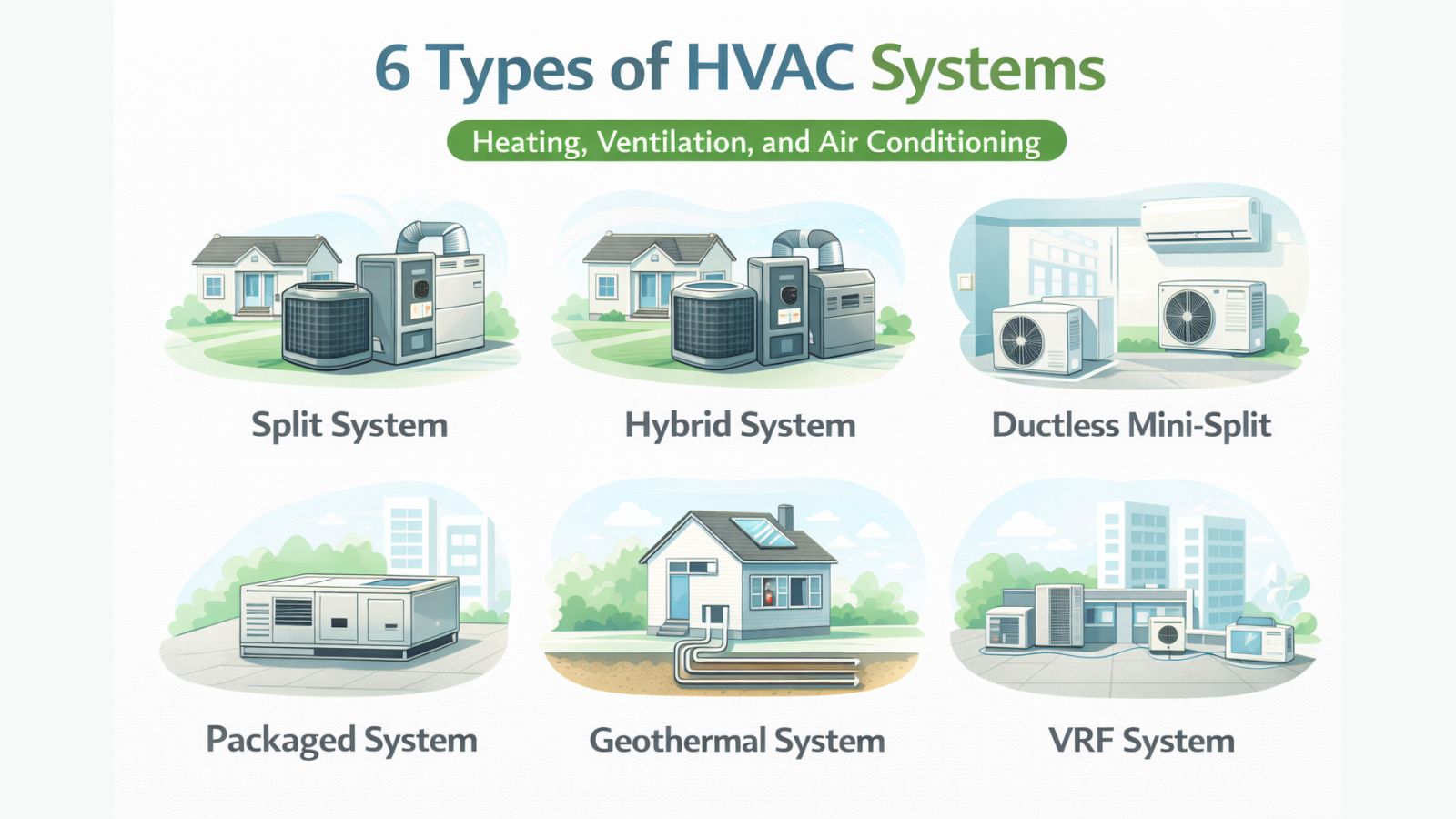
There are several types of HVAC systems, including Split Systems, Hybrid Systems, Ductless Mini-Split Systems, Packaged Systems, Geothermal Systems, and VRF Systems, each designed to meet different heating and cooling needs. These systems control temperature, airflow, and indoor air quality inside buildings.
6 Types of HVAC Systems
Choosing the right system depends on your building size, climate, and budget. Below are the most common types of HVAC systems and where they work best. Each system controls heating, cooling, and airflow in a slightly different way.
| Sr. No | HVAC System Type | Best For |
| 1 | Split System | Homes |
| 2 | Hybrid System | Homes (seasonal areas) |
| 3 | Ductless Mini-Split | Apartments, small areas |
| 4 | Packaged System | Small commercial |
| 5 | Geothermal System | Eco-friendly homes |
| 6 | VRF System | Large buildings |
1. Split HVAC Systems
Split systems are the most common types of HVAC systems used in homes. Many houses in the UK and the US use this setup because it is simple and reliable.
A split system has two main parts:
- An indoor unit (furnace or air handler)
- An outdoor unit (air conditioner or heat pump)
These two units work together to control temperature.
How It Works
- In winter, the furnace heats the air.
- In summer, the air conditioner removes heat from indoor air.
- Ducts carry the warm or cool air into every room.
According to the U.S. Department of Energy, heating and cooling account for about 43% of a typical home’s energy use. This shows why having an efficient split system is important.
2. Hybrid Split Systems
Hybrid split systems are an upgraded version of the traditional split HVAC systems. They are designed to save energy while keeping your home comfortable all year round. These systems combine two types of heating technology:
- A heat pump uses electricity to move heat into or out of the home.
- A gas furnace burns natural gas to generate heat when temperatures are very low.
The system automatically selects the energy source based on the weather. This “smart switching” ensures you always get the most efficient and cost-effective heating possible.
How It Works
- Mild Weather: The heat pump efficiently heats or cools your home using electricity.
- Cold Weather: The gas furnace takes over to provide stronger, faster heating.
This automatic switching between electricity and gas ensures the system never wastes energy.
Example: Imagine your city has winters that range from 0°C to 15°C. On a 10°C day, the heat pump heats your home efficiently. On a -5°C day, the gas furnace turns on to maintain warmth without overworking the system.
3. Ductless Mini-Split Systems
Ductless mini-split systems are one of the most flexible and energy-efficient types of HVAC systems. They are perfect for homes that do not have ductwork. Instead of using large air ducts to move air, these systems deliver heating and cooling directly to each room.
A ductless system includes:
- One outdoor compressor unit
- One or more indoor wall-mounted units
Each indoor unit works independently. This means every room can have its own temperature setting.
How It Works
- The outdoor unit contains a compressor.
- It sends refrigerant through small pipes to the indoor units.
- The indoor units heat or cool the air and release it into the room.
- The system does not use air ducts.
- This helps prevent energy loss.
The U.S. Department of Energy states that duct losses in central systems can waste more than 30% of energy.
Ductless systems avoid this waste by delivering air directly to each room.
Why Ductless Systems Are Energy Efficient
Traditional HVAC systems push air through long ducts. Over time, ducts can leak or lose heat. This wastes energy and increases bills.
Ductless systems:
- Reduce air leakage
- Use inverter technology to adjust speed as needed
- Operate only in rooms being used
This targeted heating and cooling improves efficiency and lowers energy costs.
4. Packaged HVAC Systems
Packaged HVAC systems are compact and convenient heating and cooling solutions. Unlike split systems, where components are divided between indoor and outdoor units, packaged systems place all major components inside one single outdoor unit.
Technicians usually install these systems:
- On rooftops
- On a concrete slab beside the building
This design saves valuable indoor space.
How It Works
- The system pulls air from inside the building into the unit.
- The air passes over heating or cooling components.
- The system adjusts the air temperature as needed.
- The blower then pushes the conditioned air through ducts back into the building.
Advantages of Packaged HVAC Systems
- Compact Design: All components are housed in one cabinet, reducing clutter and saving space.
- Easy Maintenance: Technicians can service all parts in one location, often from the rooftop.
- Space-Saving Solution: No indoor furnace or air handler is required, freeing up indoor storage space.
- Simplified Installation: Installation can be faster compared to complex multi-unit systems.
- Cost-Effective for Small Buildings: They often cost less than installing separate heating and cooling systems.
5. Geothermal HVAC Systems
Geothermal HVAC systems are one of the most energy-efficient and environmentally friendly types of HVAC systems. They use the earth’s natural underground temperature to heat and cool buildings instead of relying only on outside air.
Main Components
A geothermal system includes:
- Ground loops (underground pipes filled with water or antifreeze solution)
- Heat pump unit (installed inside the building)
- Air distribution system (ducts or radiant heating system)
The underground pipes can be installed horizontally or vertically, depending on available land space.
How It Works
- In winter, the system pulls heat from the ground through underground pipes. The heat pump increases the temperature and transfers warm air into the building.
- In Summer, the system removes heat from inside the building and returns it to the cooler ground.
Instead of creating heat, the system simply moves heat. This process uses much less energy.
6. VRF / VRV Systems (Variable Refrigerant Flow)
VRF (Variable Refrigerant Flow), also known as VRV (Variable Refrigerant Volume), systems are advanced HVAC systems mainly used in large commercial buildings. These systems provide precise temperature control and high energy efficiency.
How It Works
- The system adjusts the flow of refrigerant depending on how much heating or cooling each area needs.
- It sends the exact amount of refrigerant required to each indoor unit.
- Different rooms or zones can maintain different temperatures at the same time.
This demand-based operation prevents energy waste.
According to the International Energy Agency (IEA), improving energy efficiency in cooling systems could reduce global cooling energy demand growth by nearly 45% by 2050. VRF systems contribute to this goal because they operate only when needed and adjust output automatically.
Why VRF Systems Are Popular
Large buildings often have different heating and cooling needs in different rooms. For example, a sunny conference room may need cooling while interior offices need heating. VRF systems handle these differences efficiently.
Because of their advanced controls and zoning capabilities, VRF systems are considered among the most efficient solutions for modern commercial buildings.
Conclusion
Choosing the right HVAC system is important for comfort, energy savings, and long-term costs.
Each system works in a different way and is designed for specific needs. Split systems are common in homes, while hybrid systems offer energy flexibility. Ductless mini-splits are great for small spaces, and packaged systems work well for small commercial buildings. Geothermal systems are eco-friendly, and VRF systems are ideal for large buildings.
Understanding these types of HVAC systems helps you make a smart decision based on your space, climate, and budget.
Frequently Asked Questions
Geothermal systems are the most energy-efficient because they use stable underground temperatures to heat and cool buildings with less electricity.
HVAC systems heat, cool, and move air inside buildings to control temperature, airflow, and indoor air quality year-round.
A commercial HVAC system is designed for offices, malls, and large buildings to manage heating, cooling, and ventilation for larger spaces.
Yes, most HVAC systems need outdoor ventilation to release heat, gases, or moisture and maintain safe, efficient operation.