7 Types of Air Purifiers: HEPA, UV, Carbon & More
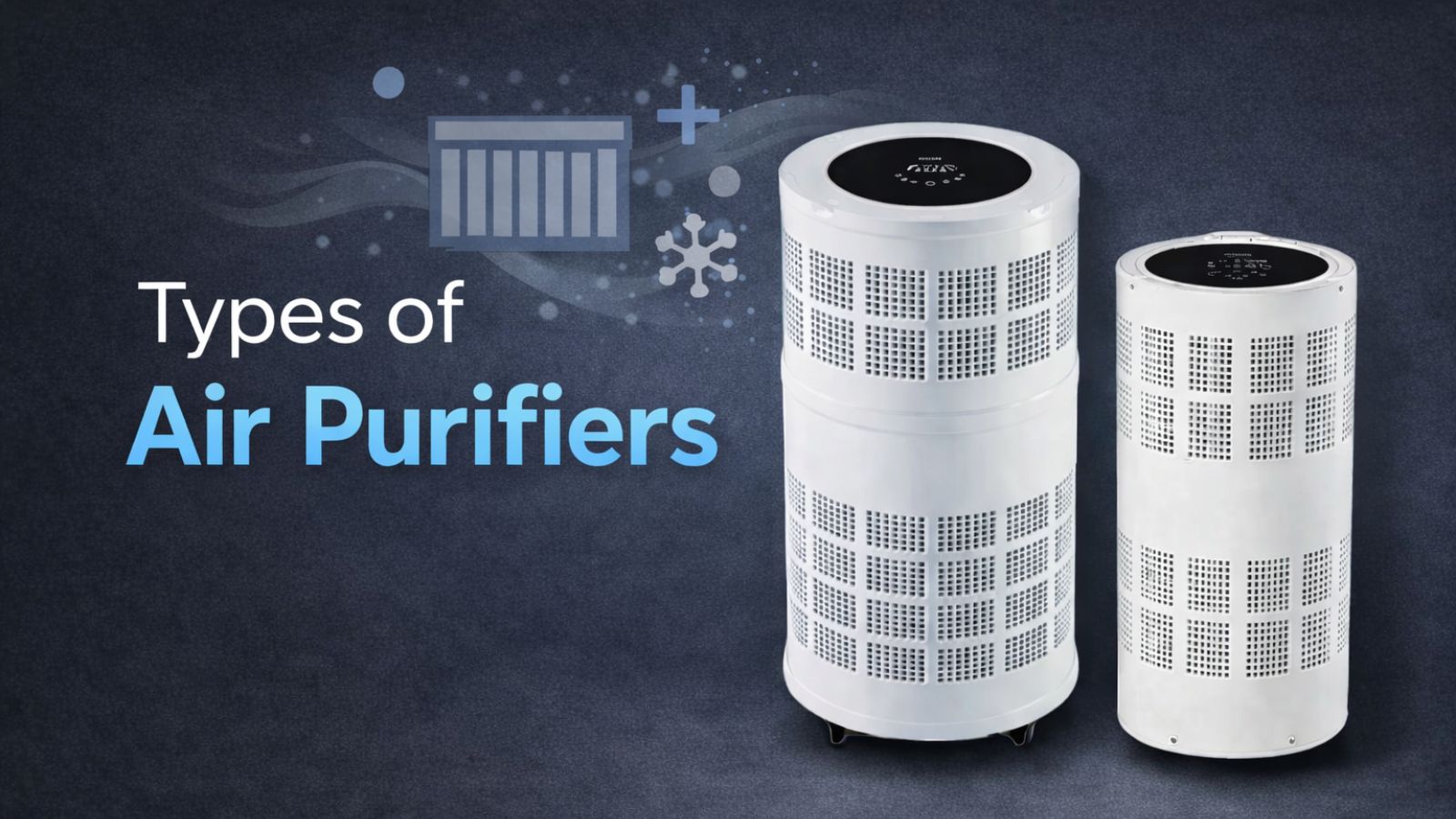
There are 7 common types of air purifiers, including HEPA, activated carbon, UV-C, ioniser, ozone, PCO and smart air purifiers. Each technology targets different pollutants, so the right choice depends on what you want to remove from your indoor air.
HEPA filters are mainly used for particles such as dust, pollen and allergens, while activated carbon helps reduce odours and gases. UV-C can provide additional protection against airborne microorganisms, while smart purifiers combine filtration with air-quality monitoring and automatic controls.
This guide explains how each type of air purifier works, what it removes, its advantages and limitations, and where it is best used.
List of 7 Types of Air Purifiers
These are 7 common air purifier types using different technologies to remove dust, gases, odours, and germs in all spaces.
| Type | Best For | Main Technology | Pros | Cons |
| HEPA Filter | Allergies, homes | Mechanical HEPA filter | Excellent for dust and pollen | No odour removal |
| Activated Carbon | Odours, VOCs | Carbon adsorption | Traps smells and gases | Needs HEPA for particles |
| UV-C Light | Germ control | Ultraviolet disinfection | Inactivates viruses and bacteria | Doesn’t catch dust alone |
| Electrostatic/Ioniser | Fine particles, small rooms | Electric charge collectors | Washable plates | May produce ozone |
| Ozone Generators | Empty rooms only | Ozone gas | Strong odour removal | Harmful in occupied spaces |
| PCO (Photocatalytic) | Chemicals, some germs | UV + catalyst | Breaks down VOCs | Variable results, complex |
| Smart Purifiers | Monitoring, large spaces | Sensors + filters + app | Real-time data and auto control | More expensive |
1. HEPA Filter Air Purifiers
HEPA air purifiers focus on solid particles in the air. “High Efficiency Particulate Air” means the filter can capture a very high percentage of fine particles from the airflow.
True HEPA removes 99.97% of particles as small as 0.3 microns, which includes dust, pollen, mould spores, pet dander, and many smoke particles.
HEPA‑based filters, such as Rensair Compact units, are widely used in small offices, clinics, and hotel rooms where people need reliable particle removal and quieter operation. An air purifier hepa system can be particularly useful where fine particle filtration is the main priority.
What HEPA filters target commonly:
- Dust and dust mites
- Pollen and other allergens
- Pet hair and pet dander
- Mould spores
- Many smoke and smog particles
Features of HEPA Filter:
| Feature | Description |
| Main purpose | Capture fine solid particles |
| Typical efficiency | 99.97% at 0.3 microns (true HEPA) |
| Best suited for | Homes, bedrooms, home offices, clinics |
| Ideal users | Allergy and asthma sufferers |
2. Activated Carbon Air Purifiers
Activated carbon air purifiers deal mainly with gases and odours. They use a special charcoal filter with millions of tiny pores that grab and hold gas molecules and smells from the air.
This makes them ideal in spaces with cooking fumes, tobacco smoke, pet odours, or chemical vapours from cleaning products and paints. Many advanced systems, including Rensair’s Core smart models, combine HEPA and carbon so that particles and odours are handled at the same time.
Typical odour and gas sources treated:
- Cooking and food smells
- Cigarette and cigar smoke odours
- Pet smells in living areas
- Chemical fumes from paints, solvents, and cleaners
- Some VOCs from furniture and flooring
Features of Activated carbon air purifiers:
| Feature | Description |
| Main purpose | Reduce odours and gases (VOCs) |
| Main technology | Activated carbon/charcoal adsorption |
| Best suited for | Kitchens, living rooms, salons, pet homes |
| Works best with | HEPA filter for full particle + odour cleaning |
3. UV‑C Light Air Purifiers
UV‑C light air purifiers are designed to inactivate microorganisms. They use ultraviolet‑C light at a specific wavelength that damages the DNA or RNA of bacteria, viruses, and mould spores.
In safer designs, such as those used inside Rensair units, the UV‑C lamp is enclosed within the filter chamber so people are not exposed directly to the light. UV‑C is usually added to HEPA and sometimes carbon filtration to provide both physical capture and germ inactivation, especially useful in healthcare and other shared environments.
How UV‑C works in air purifiers:
- Air passes through the unit and over the filter
- A UV‑C lamp shines inside a sealed section
- Germs on the filter or in the air stream are inactivated
Features of UV‑C light air purifiers:
| Feature | Description |
| Main purpose | Inactivate airborne germs |
| Main technology | Enclosed UV‑C lamp |
| Best suited for | Hospitals, clinics, care homes, busy workplaces |
| Works together with | HEPA and sometimes carbon filters |
4. Electrostatic and Ioniser Air Purifiers
Electrostatic and ioniser air purifiers use electric charges to handle airborne particles. They release ions that attach to dust and other particles, making them stick to internal plates or nearby surfaces.
Some models have removable, washable collector plates, which can reduce filter costs. Because some designs may generate small amounts of ozone, they are chosen more carefully today, and many users prefer HEPA‑based or HEPA + UVC systems instead, such as those offered by Rensair.
Typical operation steps:
- Air flows through an ionising section
- Particles receive an electrical charge
- Charged particles stick to plates or surfaces
Features of Electrostatic and ioniser air purifiers:
| Feature | Description |
| Main purpose | Capture fine particles using an electrical charge |
| Main technology | Ioniser and collector plates |
| Best suited for | Smaller rooms where ozone‑free models are chosen |
| Maintenance | Plates need regular cleaning |
| Alternatives | HEPA + UVC systems where ozone is a concern |
5. Ozone Generator Air Purifiers
Ozone generator air purifiers intentionally produce ozone gas. Ozone reacts with odours and some chemical pollutants and is sometimes used for “shock treatment” in empty spaces, such as after fire or heavy smoke damage.
However, ozone is harmful to humans and animals when breathed in, especially in enclosed rooms.
Main points to know:
- Used only in unoccupied rooms for special treatments
- Rooms must be aired out before people re‑enter
- Not suitable for daily home or office purification
Features of Ozone generator air purifiers:
| Feature | Description |
| Main purpose | Shock odour treatment in empty spaces |
| Main technology | Ozone gas production |
| Best suited for | Specialist cleaning with no people present |
| Health note | Ozone is harmful to breathe indoors |
| Not used by | Rensair and similar health‑focused brands |
6. Photocatalytic Oxidation (PCO) Air Purifiers
Photocatalytic Oxidation purifiers use UV light and a catalyst, such as titanium dioxide, to create reactive species that break down certain gases and microbes.
Performance can vary a lot between designs, and some systems may produce small by‑products. Because of this complexity, PCO is more common in specialised systems than in typical home or office air purifiers.
Key elements of PCO systems:
- Catalyst‑coated surface (often titanium dioxide)
- UV light shining on the catalyst
- Chemical reactions that break down pollutants
Features of Photocatalytic Oxidation purifiers:
| Feature | Description |
| Main purpose | Break down VOCs and some microbes |
| Main technology | UV light + photocatalyst |
| Best suited for | Specialised or industrial applications |
| Performance | Varies by design and operating conditions |
| Common alternative | HEPA + carbon + UVC systems like Rensair |
7. Smart Air Purifiers
Smart air purifiers combine strong filtration with intelligent control. They use sensors to measure air quality and can automatically adjust fan speed to match pollution levels.
Through an app or online dashboard, users can see real‑time data, change settings, and receive alerts about filter status. Rensair Core smart models are examples that combine HEPA, carbon, UVC, and advanced sensors to monitor particles, CO₂, VOCs, temperature, and humidity in offices, schools, clinics, and other shared spaces.
Features of Smart air purifiers:
| Feature | Description |
| Main purpose | Clean air plus monitoring and automation |
| Main technology | Filters + sensors + connectivity |
| Best suited for | Offices, schools, clinics, gyms, smart homes |
| Rensair examples | Core 600, Core 560, Core 330 smart models |
| Key advantage | Real‑time data and easier air quality management |
Conclusion – Types of Air Purifiers
Clean indoor air is important for your health and comfort. Different types of air purifiers remove different kinds of pollutants, such as dust, pollen, smoke, odours, and germs. HEPA filters are great for allergies, activated carbon helps with smells, and UV‑C light adds extra germ protection when combined with filters.
Rensair air purifiers bring these strengths together in one range, from in‑car AirBubbl units to Compact and Core smart models for rooms and large spaces. Choose the type that best matches your space and air quality needs.
Frequently Asked Questions
The most effective purifiers usually use true HEPA or better, plus activated carbon, sized correctly for your room and used consistently.
HEPA is better and safer for everyday use; ozone generators can be harmful and are not recommended for occupied rooms.
No, hospitals mainly rely on HEPA filtration, ventilation, sometimes UV‑C, not ozone, for routine air cleaning.
Good air purifiers can remove most airborne particles and some gases in a room, but they cannot fix poor ventilation or surface contamination.