


Does Pollution Affect Mental Health and Mood?
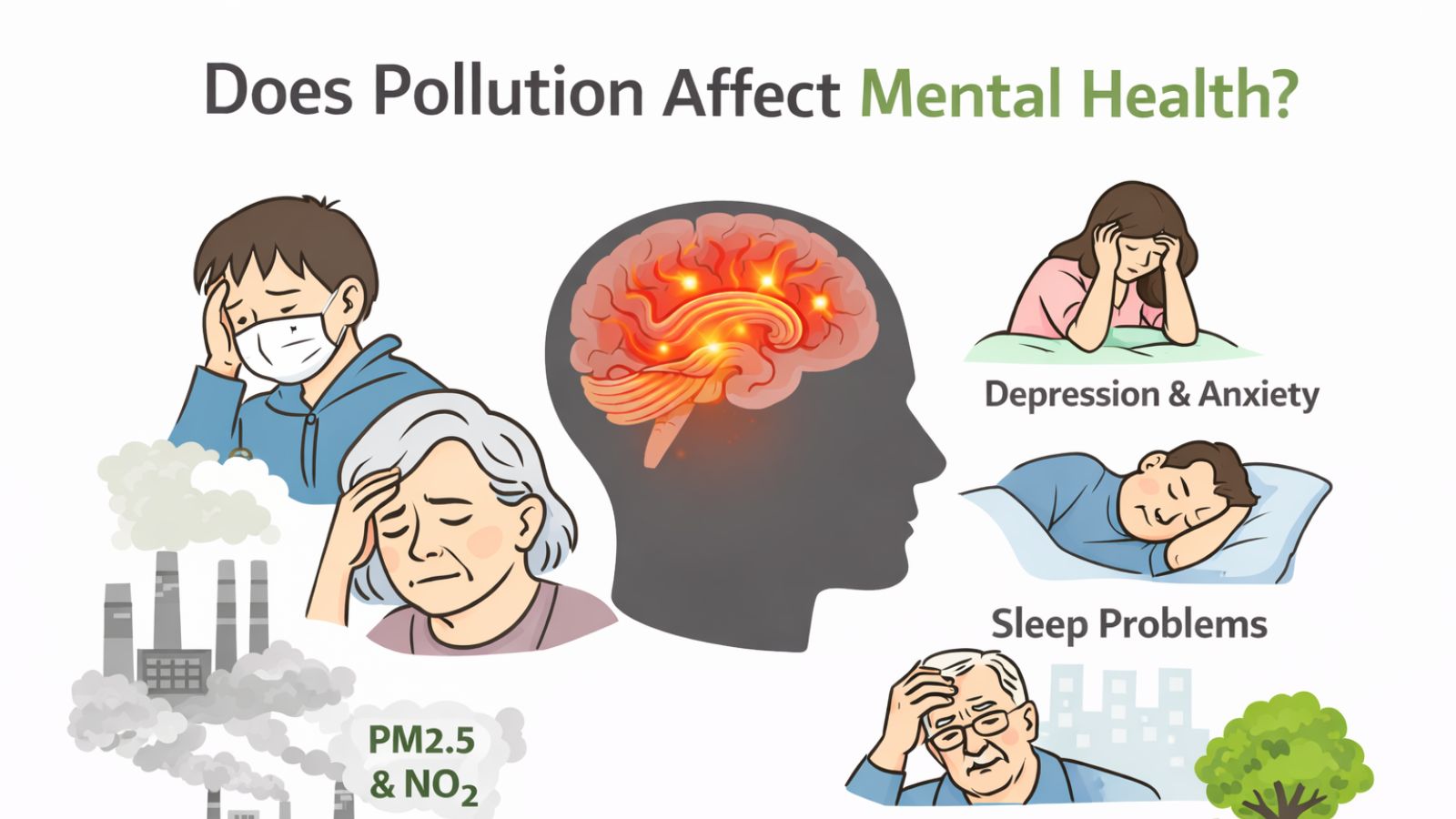
Air quality is often discussed in terms of physical health, but its impact goes far beyond breathing. So, does Pollution Affect Mental Health? Yes. It can influence mood, stress levels, sleep, and overall mental well-being. People feel more tired, anxious, or sad when the air quality is poor. Recent studies show pollution can increase risks of mental health problems like depression, anxiety, and memory issues.
Children and older people are especially at risk because their brains are more sensitive. Pollution causes inflammation in the brain, which can change how we think and feel. Understanding this link helps us take simple steps to protect our mental health. Let’s explore more.
How Pollution Impacts Your Mood
When you breathe polluted air, tiny particles enter your bloodstream and can reach your brain. These particles trigger inflammation, oxidative stress, and neural changes that influence mood regulation. Over time, this can cause or worsen conditions such as:
- Low mood and irritability
- Sleep problems
- Depression and anxiety
- Memory and concentration issues
Common Mental Health Problems Caused by Air Pollution
According to a salon.com, air pollution doesn’t just harm the lungs; it can also affect the brain and mood. Exposure to pollutants like PM₂.₅ and NO₂ is linked to anxiety, depression, and cognitive problems.
| Health Issue | Pollution Problem |
| Depression | Particles and gases trigger brain inflammation, affecting mood. |
| Anxiety | Polluted air increases stress and nervousness. |
| Emotional Well-being & Sleep | Pollution disrupts sleep and reduces outdoor activity. |
| Cognitive Decline & Memory Problems | Long-term exposure impairs memory and thinking, increasing dementia risk. |
Depression
Air pollution causes inflammation and chemical changes in the brain. Harmful particles like PM2.5 and gases can reach the brain, triggering inflammation that affects mood-regulating areas like the hippocampus and prefrontal cortex.
Anxiety
Exposure to polluted air can increase stress responses and brain inflammation. This triggers feelings of nervousness and restlessness, disrupting normal emotional balance.
Emotional Well-being & Sleep
Pollution can harm your overall emotional health:
- It can cause trouble sleeping, which affects mood.
- Poor air quality discourages outdoor activity, reducing opportunities for exercise and social interaction, both of which are essential for mental well-being.
Cognitive Decline & Memory Problems
Long-term exposure to fine particles can damage memory and thinking skills and may speed up the development of dementia. Research shows that every 10 µg/m³ increase in PM₂.₅ is linked to faster cognitive decline.
Research on Pollution and Mental Health
According to a King’s College London study that followed 5,024 people with dementia for up to nine years. It found that people living in areas with more Nitrogen Dioxide (NO₂) were 27% more likely to need community mental health services. Those exposed to higher levels of fine particles (PM₂.₅) were 33% more likely to use these services.
The study found that air pollution can make mental health and behaviour problems, like depression, psychosis, or mood changes, worse in people who already have dementia.
Why Are Children and Vulnerable Groups More Affected by Air Pollution?
Air pollution does not harm everyone in the same way. Some people, like children, older adults, and those who are already unwell, are more at risk.
People living in poor or crowded areas also face more danger from air pollution.
Developing or Ageing Brains
- Children’s brains are still growing.
- Older people’s brains are more fragile.
Both groups can be easily harmed by air pollution, especially by tiny dust particles like PM₂.₅ and gases like NO₂. These can cause swelling and damage in the brain, which affects how we think and feel.
Higher Exposure
Many low-income families live near busy roads or factories where air pollution is worse. They may not have parks or clean places to play or walk.
Less access to good healthcare and clean air makes the effects of air pollution even stronger.
Existing Health Problems
If someone already has mental health problems like anxiety, depression, or memory issues, air pollution can make them worse.
Breathing dirty air can increase stress and make it harder to stay calm and focused.
Long-Term Effects
Being around air pollution for a long time can cause lasting harm. Children may carry these problems into adulthood.
Older people may find their brains ageing faster or have more memory loss.
Can Green Spaces and Cleaner Air Help?
Yes, Studies show that access to parks, trees, and green spaces can reduce the harmful effects on mental health. Green surroundings promote relaxation, reduce stress, and improve physical health, which in turn benefits the mind.
Practical Tips to Protect Your Mental Health from Pollution
- Use face masks when pollution levels are high
- Ventilate your home with air purifiers or by opening windows when the air is clean
- Spend time in green spaces or the countryside regularly
- Support cleaner transport options like cycling or public transport
- Stay informed about local air quality levels and adjust outdoor activities accordingly
Conclusion
Pollution does affect mental health significantly. It impacts mood, increases risks of depression, anxiety, dementia, and worsens existing mental illnesses. Vulnerable groups such as children and older adults are especially at risk.
Taking proactive measures like reducing exposure and promoting green spaces can help mitigate these effects. Awareness of how pollution impacts your mood is vital for protecting your mental well-being.
Frequently Asked Questions
Pollution can trigger inflammation and oxidative stress in the brain that regulates mood. Long-term exposure is linked to anxiety, depression, cognitive decline, and increased risk of dementia.
Fine particles (PM₂.₅) and gases like NO₂ can enter the bloodstream and reach the brain, causing inflammation, cell damage, and disrupted neural connections. This may lead to memory problems, slower thinking, and mood changes.
Yes. Short-term exposure to polluted air can cause headaches, fatigue, irritability, dizziness, and difficulty concentrating. Long-term exposure may worsen mental health and increase the risk of chronic diseases.
Air pollution is associated with respiratory diseases (asthma, COPD), cardiovascular problems (heart attacks, stroke), neurological disorders (dementia, cognitive decline), and mental health conditions like depression and anxiety.
The lungs are the most directly affected, but pollution also impacts the brain, heart, and other organs over time, contributing to both physical and mental health issues.
Children, older adults, people with pre-existing health conditions, and those living in high-pollution or low-income areas are most at risk due to higher exposure and increased sensitivity.