


How Air Filtration Impacts Energy Consumption
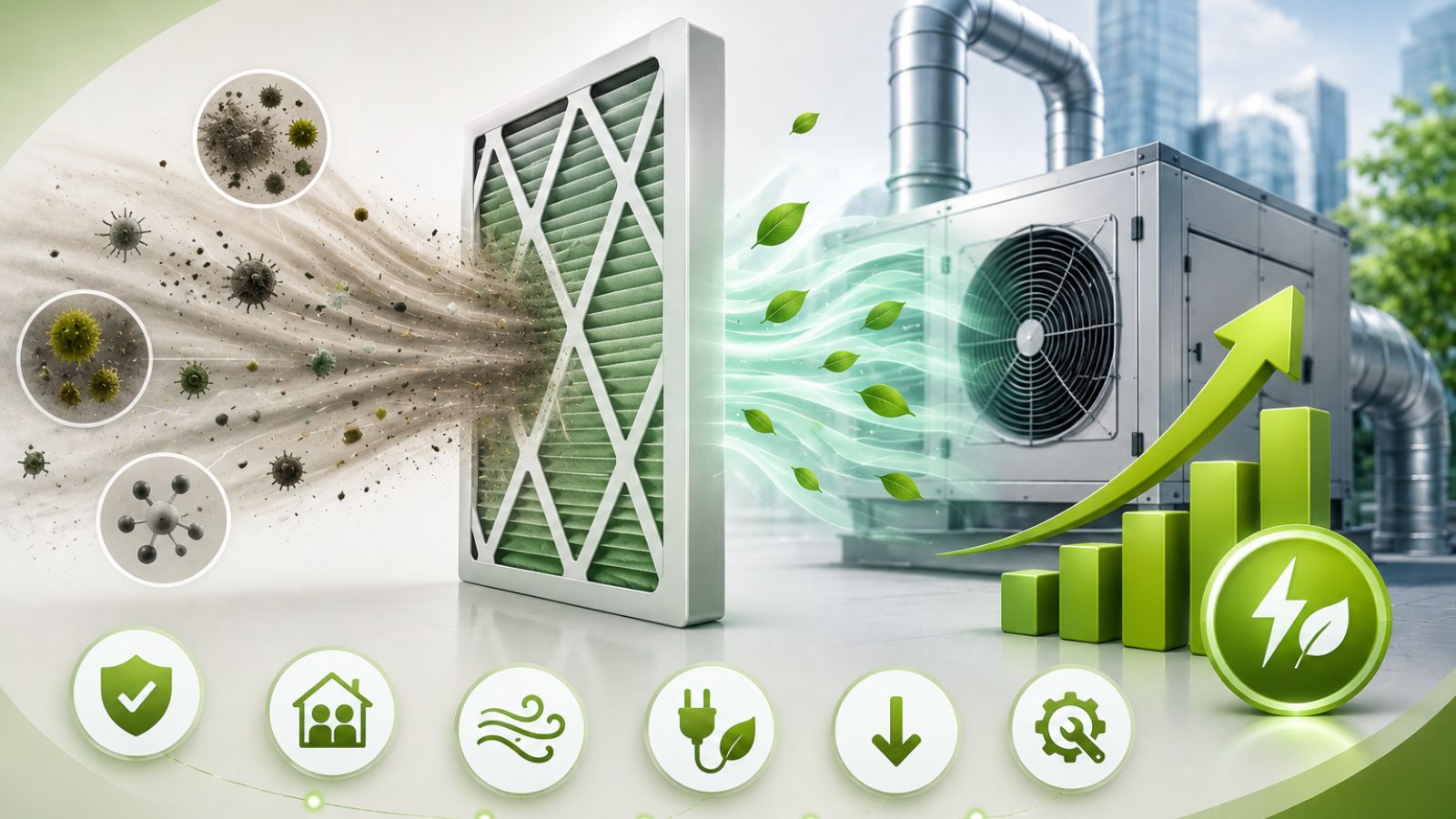
Clean air is essential for healthy indoor environments, but did you know it also affects your energy bills?
HVAC filters remove dust, allergens, and pollutants, keeping air safe to breathe. At the same time, the way filters are chosen, maintained, and replaced can either save energy or make your system work harder.
From clogged filters to high-efficiency designs, air filtration directly impacts airflow, fan power, and electricity use. Understanding this connection helps businesses and homeowners improve indoor air quality without increasing energy costs.
What Is Air Filtration in HVAC Systems?
Air filtration in HVAC (Heating, Ventilation, and Air Conditioning) systems is the process of removing dust, pollutants, allergens, and harmful particles from the air using filters.
These filters are essential because they:
- Protect HVAC equipment from dust buildup and damage
- Improve indoor air quality (IAQ) for occupants
- Ensure smooth and consistent airflow throughout the building
Without proper filtration, indoor air can become polluted, and HVAC systems may struggle to operate efficiently.
However, air filtration is not just about cleaner air; it also has a strong impact on how much energy your system uses.
How Air Filtration Affects Energy Consumption
Air filtration and energy consumption are closely connected. The way filters are designed, used, and maintained can either improve efficiency or increase energy costs.
When airflow is restricted, HVAC systems need more power to operate. This leads to higher electricity usage and increased operational costs. Let’s understand how this works in detail.
1. Airflow Resistance and Pressure Drop
Every air filter creates some resistance to airflow, which is called pressure drop.
- When air moves through a filter, the HVAC system must push it through the filter material
- The denser the filter, the harder it is for air to pass through
- As a result, the system uses more energy to maintain airflow
Over time, filters collect dust and particles. This increases resistance even more.
According to Filters Direct, as filters become dirty, pressure drop increases, which leads to higher fan energy consumption.
2. Filter Efficiency vs Energy Use
Air filters are rated by their efficiency, often using the MERV (Minimum Efficiency Reporting Value) rating.
- Higher MERV filters capture smaller and more harmful particles
- Lower MERV filters allow more particles to pass through
At first, it may seem that high-efficiency filters always increase energy use because they restrict airflow more. But the reality is more balanced.
Studies show:
- High-efficiency filters do not always significantly increase energy consumption
- In well-designed HVAC systems, they can maintain efficiency without major energy penalties
- Proper airflow design can offset the resistance caused by better filters
The Impact of Dirty or Clogged Filters
Air filters trap dust, pollen, and other particles to keep indoor air clean. Dirty or clogged filters not only reduce air quality but also make HVAC systems work harder, using more energy.
Reduced Airflow and System Strain
Clogged filters block airflow, forcing fans to work harder. This reduces HVAC efficiency and increases energy use. The more dust a filter holds, the more resistance it creates, raising fan power demand.
Higher Energy Costs
When filters are clogged, HVAC systems consume more electricity. Studies show that regular filter replacement and system cleaning can cut fan energy use by 41-60%.
Do High-Efficiency Filters Increase Energy Use?
Many people think high-efficiency filters always increase energy use because they are denser and may restrict airflow.
The reality is:
- High-efficiency filters can slightly increase resistance, but in well-designed HVAC systems, the impact on energy use is usually small.
- Studies show that properly matched filters rarely cause significant increases in fan power or electricity bills.
- The biggest energy problems come from poor system design or dirty filters, not the filter efficiency itself.
Strategies to Optimize Air Filtration for Energy Savings
Optimizing air filtration is key to improving indoor air quality while keeping energy costs low. Here are practical strategies:
- Choose the Right Filter: Select filters that match your HVAC system’s design. Using an overly dense filter can restrict airflow and make the system work harder.
- Replace Filters Regularly: Dirty or clogged filters increase resistance and energy consumption.
- Monitor Pressure Drop: Track how much resistance your filters create. A rising pressure drop indicates it’s time to replace the filter before energy use rises.
- Maintain HVAC Systems: Regularly clean ducts, coils, and fans. Well-maintained systems circulate air more efficiently, reducing fan power and lowering electricity costs.
- Use Advanced Filtration Systems: Consider advanced solutions which capture airborne contaminants efficiently without overloading the HVAC system.
Role of Advanced Air Filtration Systems
Advanced solutions like Rensair air purifiers keep the air clean without making the HVAC system work harder.
How Rensair Helps:
- Removes dust, allergens, and germs from the air
- Works with your HVAC system without adding extra load
- Keeps airflow smooth, so fans don’t have to work harder
- Saves energy by reducing electricity use
- Lowers maintenance costs and keeps equipment lasting longer
Conclusion
Air filtration affects both air quality and energy use. Dirty or clogged filters make HVAC systems work harder, increasing energy costs and reducing comfort. High-efficiency filters don’t always raise energy use if the system is well-designed.
Regular maintenance, proper filter selection, and advanced solutions like Rensair can improve air quality while keeping energy consumption low. Optimizing air filtration not only saves electricity and money but also extends the life of your HVAC system and ensures a healthier indoor environment.
Frequently Asked Questions
Not always. In well-designed HVAC systems, high-efficiency filters slightly increase resistance but usually have minimal impact on energy consumption.
Replace filters every 1–3 months or as manufacturer recommends to maintain airflow, energy efficiency, and good indoor air quality.
Clogged filters restrict airflow, making HVAC systems work harder, use more electricity, and reduce overall system efficiency.
Clean filters ensure proper airflow, maintain consistent temperature, and improve indoor air quality, making spaces healthier and more comfortable.