


How Offices Can Improve Employee Productivity with Better Air
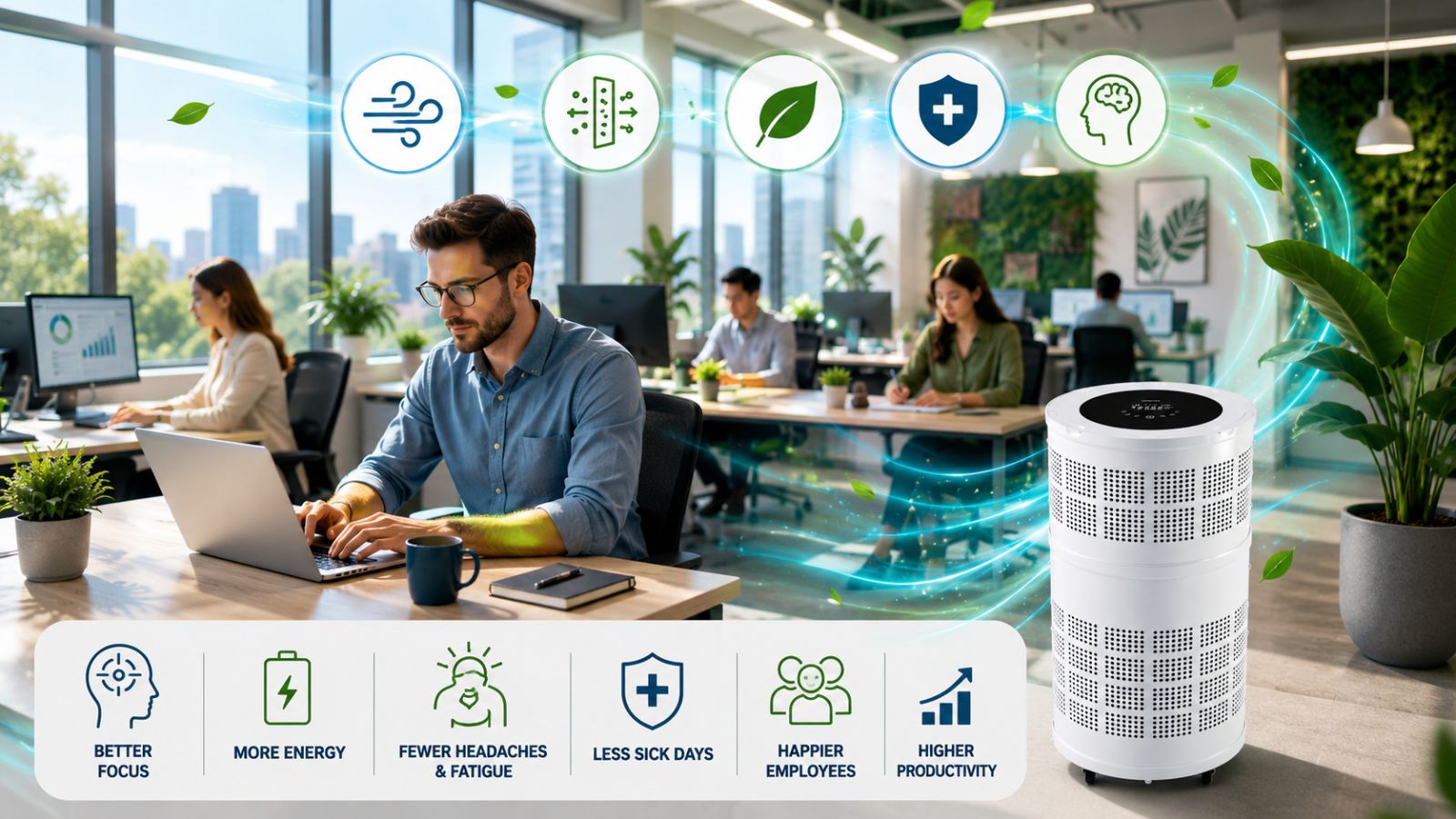
The quality of the air inside your office has a direct impact on how people think, feel, and perform. While businesses invest heavily in technology, workplace design, and employee wellbeing initiatives, one critical factor is often overlooked: indoor air quality.
Employees spend up to 90% of their working day indoors, breathing the same air for hours at a time. When that air contains elevated levels of carbon dioxide, particulate matter, and other pollutants, it can lead to fatigue, headaches, reduced concentration, and lower cognitive performance. Over time, poor indoor air quality can contribute to increased absenteeism, lower employee satisfaction, and reduced productivity across the organisation.
By creating healthier indoor environments through improved ventilation, effective air purification, and proactive HVAC management, organisations can help employees stay focused, energised, and productive throughout the day. Better air isn’t just a health benefit—it’s a business advantage that supports workplace performance, wellbeing, and operational success.
Why Air Quality Affects Office Productivity
According to the United States Environmental Protection Agency, employees spend nearly 90% of their time indoors, where air can often be 2-5 times more polluted than outdoor air. This makes indoor air quality a critical workplace factor.
Poor air quality impacts productivity in several ways:
- Reduces concentration and cognitive performance
- Increases headaches, fatigue, and irritation
- Leads to higher absenteeism due to illness
- Increases stress and discomfort at work
Research shows that higher CO₂ levels and pollutants like PM2.5 directly reduce brain function and productivity in office environments.
Even small improvements in air quality can lead to measurable gains in performance and efficiency.
7 Ways to Improve Office Air Quality for Better Productivity
Improving office air quality and productivity is not about one single change. It requires a combination of better ventilation, effective air purification, and consistent workplace maintenance.
Below are practical, science-backed ways offices can improve air quality, along with how solutions like Rensair air purifiers for office spaces can help create a healthier workplace.
1. Improve Ventilation Systems
Good ventilation is the foundation of healthy indoor air. Many modern offices are sealed buildings, which means pollutants and stale air can easily build up if ventilation is not properly managed.
What offices should do:
- Increase the supply of fresh outdoor air into the building
- Ensure HVAC systems are properly balanced and efficient
- Avoid continuous recirculation of stale indoor air
- Schedule regular HVAC inspections and maintenance
When ventilation is poor, carbon dioxide (CO₂) levels rise quickly. High CO₂ levels reduce alertness, slow thinking, and negatively impact decision-making ability. Studies confirm that well-ventilated offices improve cognitive performance and productivity significantly.
2. Use High-Efficiency Air Purification Systems
Even with good ventilation, outdoor pollution and indoor contaminants still enter office spaces. That’s why air purification is essential for maintaining consistently clean indoor air.
What air purifiers do:
- Capture fine particles like PM2.5 (dust, smoke, traffic pollution)
- Remove allergens such as pollen and dust mites
- Reduce airborne bacteria and viruses
- Improve overall air freshness and comfort
Why it improves productivity:
Cleaner air reduces irritation in the eyes, throat, and lungs. Employees feel less fatigued, think more clearly, and stay focused for longer periods.
A strong example is Rensair air purifiers for office spaces, which are designed specifically for commercial environments. They provide continuous, hospital-grade air filtration, helping offices maintain stable and clean air quality even during high occupancy.
3. Control Indoor CO₂ Levels
CO₂ is one of the most important indicators of indoor air quality, especially in office environments with many people sharing the same space.
What offices should do:
- Install CO₂ monitors in meeting rooms and open-plan areas
- Maintain CO₂ levels ideally below 800-1000 ppm
- Increase ventilation when levels rise
- Avoid overcrowding in enclosed rooms
High CO₂ levels are linked to drowsiness, reduced focus, and slower cognitive function. Even moderate increases can negatively affect productivity and decision-making speed.
4. Reduce Indoor Pollution Sources
Many office pollutants come from everyday materials and activities that are often overlooked.
Common sources include:
- Furniture and materials with high VOC emissions
- Strong chemical cleaning products
- Dust buildup in carpets
- Poorly maintained printers and office equipment
What offices should do:
- Choose low-VOC paints, furniture, and finishes
- Switch to eco-friendly cleaning products
- Clean carpets, desks, and air vents regularly
- Maintain office equipment to reduce emissions
Volatile Organic Compounds (VOCs) can cause headaches, dizziness, and long-term respiratory irritation. Reducing them directly improves comfort and productivity at work.
5. Introduce Indoor Plants
Indoor plants are often used to improve office environments, but their impact on air purification is limited.
Benefits of plants:
- Improve visual comfort and reduce stress levels
- Add natural humidity balance to dry environments
- Increase workplace aesthetics and mood
Plants cannot replace mechanical ventilation or air purification systems. Their impact on removing pollutants is minimal in real office conditions.
Use plants as a supportive design element, not as a primary air quality solution.
6. Maintain Temperature and Humidity Levels
Air quality is not only about pollutants, it also includes thermal comfort, which directly affects productivity.
What offices should do:
- Use smart HVAC systems to maintain stable indoor conditions
- Avoid sudden temperature fluctuations
- Use humidifiers in dry environments or dehumidifiers in humid conditions
Incorrect temperature or humidity levels can lead to fatigue, dry eyes, dehydration, and reduced concentration, directly affecting office performance.
7. Regular Cleaning and HVAC Maintenance
Even the best air systems fail if they are not properly maintained over time.
What offices should do:
- Replace HVAC filters regularly
- Clean air ducts and ventilation systems
- Maintain dust-free workstations and carpets
- Ensure consistent cleaning of shared office spaces
Dust, mold, and clogged filters restrict airflow and reduce air quality. This leads to increased allergens and pollutants circulating indoors, reducing employee comfort and productivity.
How Rensair Supports Office Air Quality And Productivity
While basic steps like ventilation and cleaning are important, modern offices need continuous air purification to maintain consistent air quality.
Rensair air purifiers for offices spaces are designed to:
- Deliver hospital-grade air filtration
- Remove fine particles, bacteria, and airborne pollutants
- Improve air circulation in large office spaces
- Support healthier, more productive work environments
Unlike basic systems, our solutions are built for commercial environments where air quality directly impacts employee performance and wellbeing.
Conclusion
Improving office air quality is one of the simplest and most effective ways to improve employee productivity. Clean and fresh air helps people think clearly, stay focused, and feel more energetic throughout the working day.
Regular cleaning and air purification also play a key role in maintaining consistent air quality. Solutions like Rensair air purifiers for office spaces further support cleaner indoor air. Overall, better air quality leads to happier employees, fewer sick days, and improved workplace performance.
Frequently Asked Questions
Improve ventilation, use air purifiers, reduce dust, maintain HVAC systems, and control CO₂ and humidity levels regularly.
A good office improves comfort, focus, and energy with clean air, proper lighting, and balanced temperature for better productivity.
Increase fresh air, use air purifiers, clean regularly, maintain HVAC systems, and reduce indoor pollution sources consistently.