


PM2.5 and PM10 Size and Health: Differences Explained
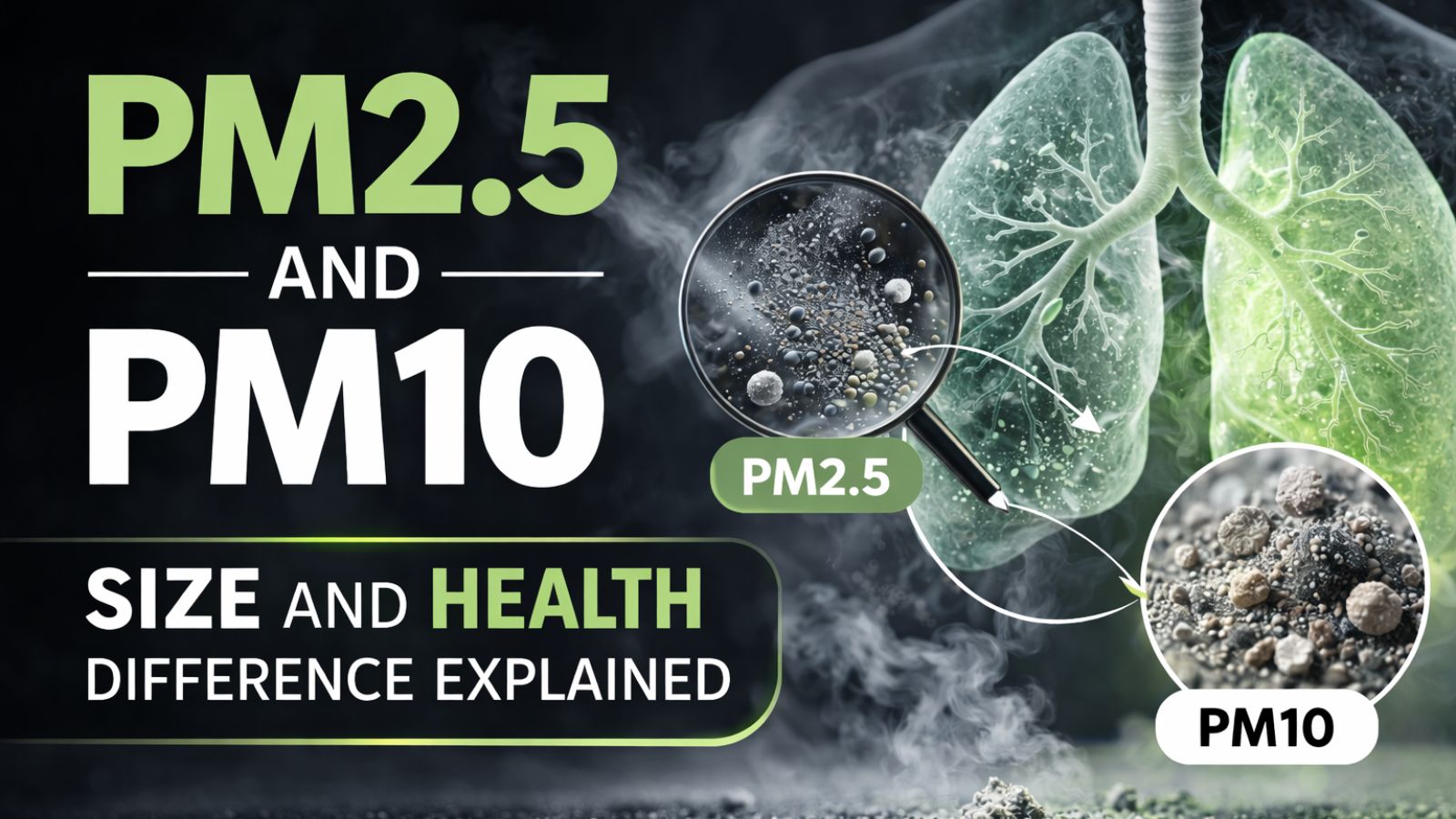
The air around us may look clean, but it often contains tiny particles that we breathe in every day. These particles are called PM2.5 and PM10. They are so small that we cannot see or smell them, but they can still affect our health.
PM2.5 and PM10 come from things like cars, smoke, dust, and construction work. The main difference between them is size. Smaller particles can travel deeper into the lungs and cause more harm.
In this blog, you will learn what PM2.5 and PM10 are, how they are different, how they affect health, and why clean air is important for everyone.
What is Particulate Matter (PM)?
Particulate Matter, or PM, means tiny particles floating in the air around us. It is not just one type of pollution. Instead, it is a mix of many small things like dust, smoke, dirt, and liquid droplets. Some particles are dry and solid, while others are tiny drops of liquid or solid pieces covered with liquid.
These particles can be different in size, shape, and material. They may contain metals, carbon, chemicals, organic matter, or dust from soil and roads. Because they are so small, we can easily breathe them in without noticing.
Difference Between PM2.5 and PM10
PM2.5 and PM10 are tiny particles in the air. The main difference between them is their size.
PM10 particles are bigger and usually come from dust, construction, and pollen. They mostly affect the nose, throat, and upper lungs.
PM2.5 particles are much smaller and come from vehicle smoke, burning fuel, and factories. They can reach deep into the lungs and even enter the bloodstream, which makes them more harmful.
| Basis | PM2.5 | PM10 |
| Full form | Particulate Matter ≤ 2.5 micrometres | Particulate Matter ≤ 10 micrometres |
| Particle size | Very tiny particles | Larger than PM2.5 but still small |
| Visibility | Cannot be seen by the naked eye | Slightly visible in dusty air |
| Common sources | Vehicle exhaust, burning fuel, factory smoke | Road dust, construction work, pollen |
| How deep does it go in the body | Reaches deep into the lungs and bloodstream | Enters the nose and upper lungs |
| Short-term effects | Breathing problems, eye irritation | Coughing, sneezing, throat irritation |
| Long-term effects | Heart disease, lung damage, asthma | Lung issues if exposure is long-term |
| Air quality concern | High concern | Moderate concern |
| Size comparison | About 30 times thinner than a human hair | About 7 times thinner than a human hair |
Health Impacts of PM2.5 and PM10
Air pollution is not just a scientific issue; it affects our health every day. Tiny particles like PM10 and PM2.5 are so small that we breathe them in without realising it. Because they are different sizes, they affect the body in different ways.
Knowing how these particles impact our health helps us understand why clean air is so important for everyone.
How These Particles Affect the Body
Both PM10 and PM2.5 can get into the body when we breathe:
- PM10 particles can enter the nose and throat and irritate them, which can cause coughing and a scratchy throat.
- PM2.5 particles are even smaller. They can travel deep into the lungs and enter the bloodstream, reaching the heart and other organs.
Smaller particles can travel deeper inside the body. Because of this, they can cause more serious health problems.
Short-Term (Immediate) Health Effects
Even short periods of exposure to high particle pollution can cause health problems:
- Irritation of the eyes, nose, and throat
- Coughing and wheezing
- Shortness of breath and chest tightness
- More frequent asthma attacks in people who already have asthma
- People with heart or lung disease may experience worsening symptoms
Children, older adults, and people with existing lung or heart conditions are especially sensitive. Breathing polluted air when active outdoors makes these effects stronger because deeper breaths bring more particles into the lungs.
Long-Term (Over Years) Health Impacts
When people are exposed to particle pollution over many years, the effects can become serious:
- Heart and cardiovascular disease: Long-term PM exposure is linked to heart attacks and heart disease.
- Stroke: Tiny particles are associated with an increased risk of strokes.
- Reduced lung function: Especially in children whose lungs are still growing.
- Chronic bronchitis and COPD: Long-term irritation and inflammation.
Short-term exposure may make asthma or bronchitis flare up, while long-term exposure increases the risk of serious conditions and even premature death.
In the UK, according to gov.uk, air quality tests show that tiny air pollution particles have reduced over time. This is mainly because cleaner fuels are used and stricter pollution rules are in place.
- PM2.5 levels at urban background sites fell from 12.4 µg/m³ in 2009 to 7.2 µg/m³ in 2024, the lowest recorded.
- PM10 levels have significantly decreased over the long term, falling from 36.1 µg/m³ in 1992 to 11.8 µg/m³ in 2024, the lowest level recorded at urban background sites.
Even though these numbers are going down, health evidence shows that any exposure above very low levels can still affect health, especially for sensitive people.
Conclusion – PM2.5 and PM10
PM2.5 and PM10 may be tiny, but their impact on health is very real. The main difference between them is size, which decides how deeply they can enter the body.
PM10 particles mostly affect the nose and throat, while PM2.5 particles are much smaller and can reach deep into the lungs and even the bloodstream. This makes PM2.5 more harmful, especially with long-term exposure.
Although air quality in the UK has improved over the years, even low levels of particle pollution can still affect health. Understanding PM2.5 vs PM10 helps us see why cleaner air is essential for protecting everyone’s health.
Protect Your Indoor Air with Rensair Air Purifiers
While we often concentrate on outdoor air pollution, indoor air quality remains equally important. Rensair air purifiers help eliminate PM2.5, PM10, and other airborne pollutants, ensuring the air you breathe is safe at home, in offices, or in public areas.
Rensair devices use hospital-grade filtration technology to capture 99.97% of fine particles and pathogens. Their portable units, such as the Core series, Compact, and AirBubbl, are perfect for any indoor environment, from homes to hospitals.Using a Rensair air purifier reduces exposure to harmful particles, protects your health, and provides cleaner, fresher air for everyone around you.
Frequently Asked Questions
According to the World Health Organisation (WHO), the safe 24-hour limit for PM2.5 is 25 µg/m³ and for PM10 is 50 µg/m³. Staying below these limits reduces health risks.
The weather can change particle levels. Wind can blow away dust, rain can wash particles from the air, and cold, calm days may trap pollutants, increasing PM2.5 and PM10.
High-efficiency air purifiers with HEPA filters can remove most PM2.5 and PM10 particles from indoor air, improving air quality at home or in offices.
Special instruments called particulate monitors or air quality sensors measure the concentration of PM2.5 and PM10 in micrograms per cubic metre (µg/m³).
PM levels often rise in winter due to more fuel burning and calm air conditions. They may decrease in rainy or windy seasons when particles are washed out or dispersed.