


HVAC in India: How Climate and Occupancy Change Energy-Saving Opportunities
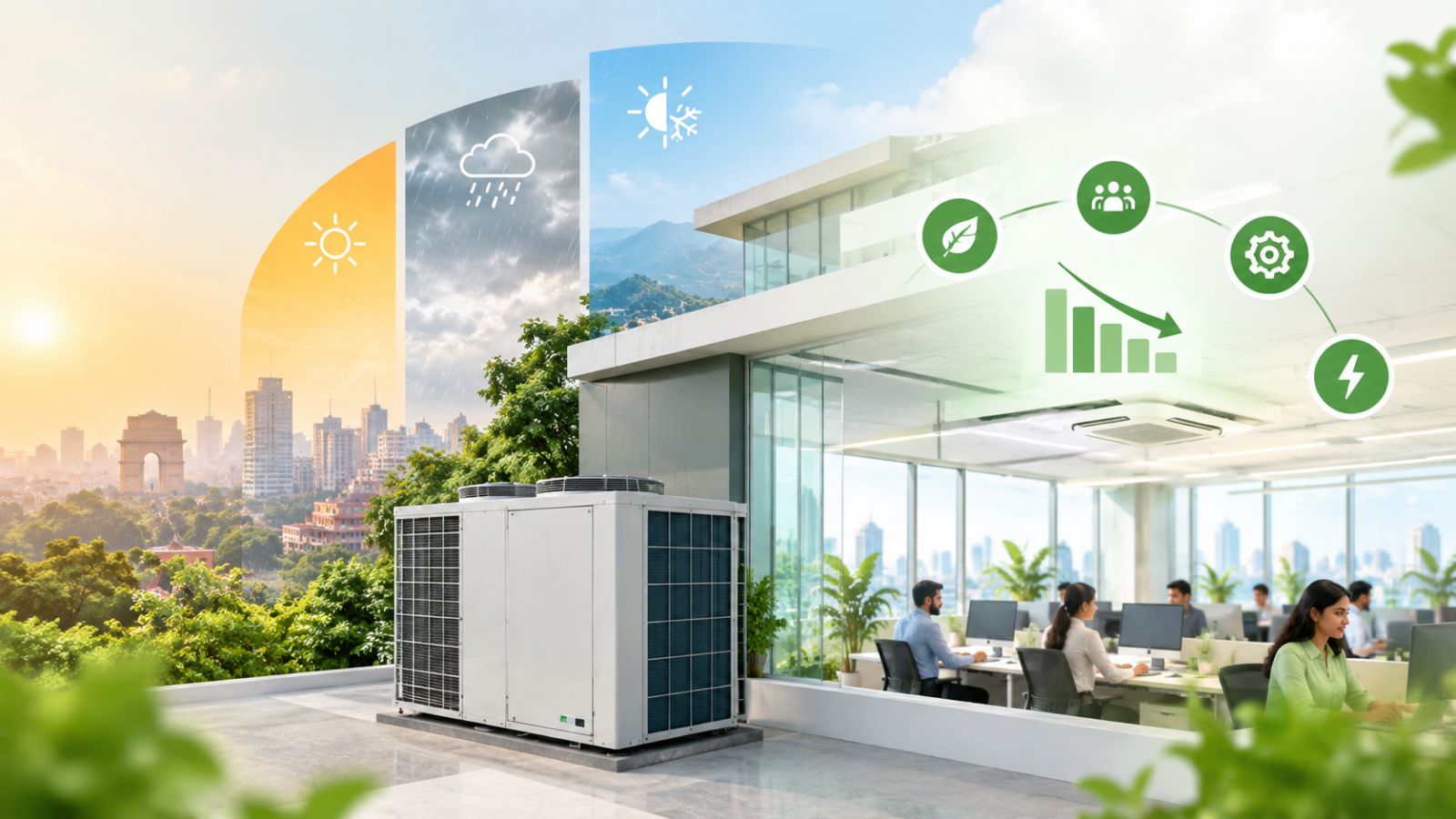
India’s climate shapes how much energy buildings need for heating, ventilation and air conditioning (HVAC). Hot summers, high humidity and temperatures determine how often air conditioning runs and how hard it works.
Where the savings depends on three things: the local climate, how a building is actually occupied, and how well its systems perform. A humid coastal office has a different cooling problem from one in a hot, dry city. A building that is half-empty for most of the day needs a different HVAC operating strategy from one that is full around the clock.
One of the largest and most overlooked loads is fresh air. Every litre brought in from outside has to be cooled. Matching ventilation to real occupancy, alongside better HVAC controls, maintenance and insulation, can cut energy costs while maintaining indoor air quality and comfort.
How India’s Climate Changes HVAC Energy Demand
India’s cooling demand is also growing beyond daytime hours. The International Energy Agency (IEA) explains that rising air conditioning use is increasing electricity demand at night, as buildings continue to need cooling after sunset. This means HVAC systems can consume energy for longer periods, even when outdoor temperatures begin to fall.
What do the latest studies show?
A 2024 study published in Building and Environment examined how climate change could affect heating and cooling needs in eight major Indian cities. It found that cooling energy demand for a model residential room could increase by 20% to 179% by the 2090s, compared with the 1990s.
The results varied by city, room orientation and emissions scenario. The study also found that walls and windows accounted for more than 63% of cooling needs, highlighting the value of insulation and shading.
The IEA also reports that cooling accounts for slightly more than 10% of India’s annual electricity demand. During hot summer nights, air conditioning can account for as much as one-third of electricity consumption.
How Building Occupancy Affects HVAC Energy Use
Occupancy changes three things: how much heat people add to a space, how much fresh air is needed, and the hours the system has to run.
When more people occupy a space, they release more heat and moisture. This can increase the need for cooling, particularly in India’s hot climate. More occupants may also require additional fresh air to maintain indoor air quality.
Occupancy patterns also vary by building type. Offices may be busy during working hours but nearly empty at night. Hotels and hospitals need longer operating hours but still see large swings between peak and off peak use.
How can buildings save energy based on occupancy?
- Use occupancy sensors: Adjust HVAC operation when rooms are empty.
- Set suitable schedules: Run systems according to working hours and building use.
- Ventilation on Demand: Use CO₂ or occupancy-based control to supply fresh air in line with how many people are actually present, not at a fixed design rate.
These measures help match HVAC operation to actual demand while maintaining indoor air quality and comfort.
Energy-Saving Opportunities for HVAC Systems
Businesses can reduce HVAC energy use by improving how their systems operate and matching them to the building’s needs. The best approach depends on the local climate, occupancy levels and the condition of existing equipment.
Optimise HVAC settings
Adjust heating and cooling schedules to match building operating hours. Avoid running systems at full capacity when areas are empty, where conditions and ventilation requirements allow. Regularly review temperature settings to maintain comfort without unnecessary energy use.
Maintain equipment regularly
Dirty filters, blocked coils and poor airflow can make HVAC systems work harder. Regular cleaning, inspections and timely repairs help equipment operate efficiently and prevent energy waste.
Use variable-speed fans
Fans often use a large share of the electricity consumed by HVAC systems. Variable-speed drives allow fan speeds to change according to airflow needs instead of running at full speed all the time. This can reduce energy use when demand is lower.
Improve insulation
Insulate roofs, walls, pipes and ducts to reduce unwanted heat gain or heat loss. Also, seal gaps around windows, doors and ducts to prevent conditioned air from escaping. These steps help HVAC systems maintain indoor temperatures with less effort.
Monitor energy use
Track HVAC energy consumption to identify unusual increases and areas where energy may be wasted. A building management system (BMS) can help monitor performance, adjust schedules and keep systems running according to actual demand.
Conclusion
HVAC energy savings in India depend on local climate, building design and how a building is really used. Hot and dry regions have different cooling needs from humid areas, while offices, hotels and hospitals require different operating schedules.
The common thread is to stop conditioning air nobody needs. That means matching ventilation to real occupancy, using air cleaning where it can replace part of the outdoor air, and backing it up with good controls, maintenance and insulation.
Frequently Asked Questions
Demand for HVAC systems in India is increasing due to rising temperatures, rapid urbanisation, and the growth of commercial buildings, offices, hospitals and data centres.
India’s HVAC sector is growing as more residential and commercial buildings require cooling, ventilation and temperature control. Rising cooling needs, infrastructure development and demand for energy-efficient systems are also supporting this growth.
The number of people in a space affects how much heat builds up and how much fresh air is needed. Matching cooling and ventilation to how many people are actually there, rather than the maximum the building was designed for, cuts unnecessary energy use.
There is no single solution for every building. Reviewing operating schedules, maintaining equipment, improving insulation and monitoring energy use can help identify the most suitable improvements.
Appropriate controls, regular maintenance and efficient equipment can reduce unnecessary energy use while maintaining required ventilation, filtration, humidity control and occupant comfort.