


Commercial HVAC Maintenance: Which Problems Drive Up Energy Bills the Most?
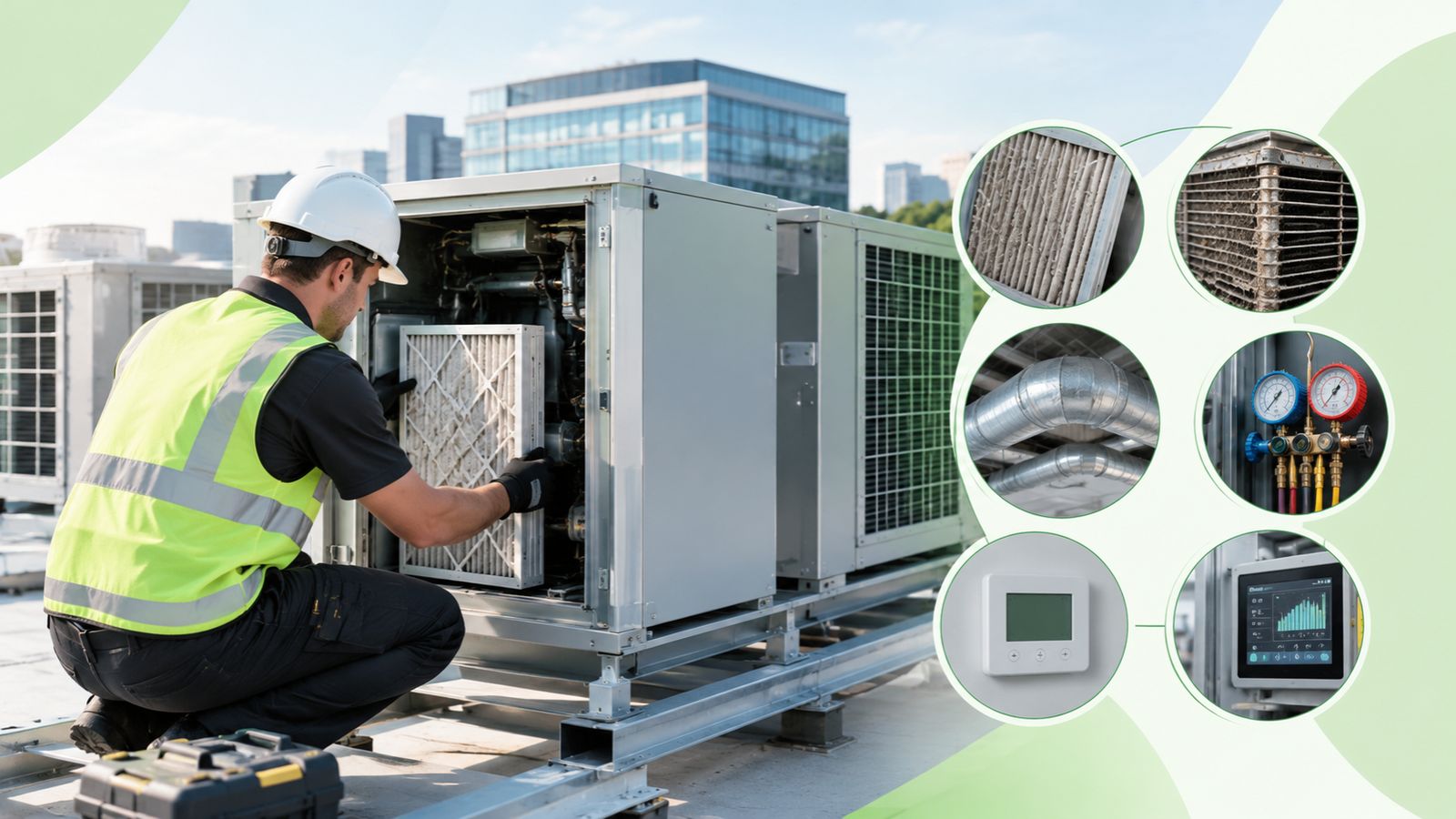
Commercial HVAC maintenance helps control energy costs by addressing faults and operating settings that waste energy. Restricted airflow, poor heat transfer and equipment running beyond occupied hours can all increase consumption.
The biggest source of waste varies by building. Facilities managers should review equipment condition, controls and operating data together to identify where corrective action will have the greatest impact. This guide explains the common problems to investigate and the checks that support more efficient operation.
Which Commercial HVAC Problems Increase Energy Bills the Most?
There is no universal ranking of HVAC faults by energy cost. A scheduling error affecting an entire building may waste more energy than a dirty filter serving one room, while a serious equipment fault can become the biggest problem in another building.
To identify the largest opportunities, assess three factors: how much equipment is affected, how severely performance is reduced and how long the problem persists. The following table provides a starting point for investigation rather than a fixed ranking.
| Problem | When it can have a particularly large impact | What facilities managers should check |
|---|---|---|
| Excessive runtime and incorrect schedules | Large systems continue operating overnight, at weekends or during periods of low occupancy. | Compare actual equipment runtime and out-of-hours energy use with building occupancy and essential operating requirements. |
| Faulty controls, sensors and settings | Incorrect readings or control sequences affect multiple zones or cause unnecessary heating and cooling. | Review sensor accuracy, setpoints, overrides and whether heating and cooling operate against each other. |
| Dirty coils and obstructed heat exchangers | Equipment operates for long hours with impaired heat transfer, particularly during periods of high demand. | Inspect coil condition, airflow and operating temperatures; compare performance with the manufacturer’s requirements. |
| Leaking or poorly insulated ductwork | Significant losses occur along ducts passing through unconditioned areas. | Investigate leakage, damaged insulation and whether the required airflow reaches occupied spaces. |
| Refrigerant leaks or incorrect charge | Cooling equipment runs for extended periods while delivering reduced capacity. | Have a qualified technician investigate suspected leaks and verify refrigerant charge against manufacturer specifications. |
| Dirty or clogged filters | High filter resistance affects heavily used systems, reducing airflow or increasing fan demand, depending on the controls. | Check filter condition, pressure drop and delivered airflow against the system’s operating requirements. |
Start with widespread problems that persist for long periods. A fault affecting a central air-handling unit throughout the working week deserves different attention from an isolated issue in an occasionally used room. Urgent equipment faults should still receive immediate attention.
The sections below explain how each problem affects performance and what to investigate.
Dirty or Clogged Air Filters
Air filters remove dust and other particles from the air moving through an HVAC system. Over time, these filters can become clogged.
A dirty filter makes it harder for air to move through the system. This can restrict airflow and make the HVAC equipment work harder to maintain the required indoor temperature.
Restricted airflow can also affect comfort. Some areas may become too warm or too cold, leading occupants or building managers to adjust thermostats more often.
Regular filter inspections can help prevent this problem. Filters should be checked and replaced according to the manufacturer’s recommendations and the conditions in the building.
For example, buildings with high occupancy, construction activity or higher levels of airborne particles may need more frequent checks.
Dirty Evaporator and Condenser Coils
Evaporator and condenser coils help an HVAC system transfer heat and keep a building at the right temperature. Over time, dust and dirt can build up on these coils.
Dirty coils make it harder for the system to transfer heat. As a result, the HVAC system may need to run for longer to reach the desired temperature. This can increase energy use and put extra strain on the equipment.
Outdoor condenser coils can collect leaves, dirt and other debris. Anything blocking the area around the unit can also reduce airflow.
Regular maintenance should include checking and cleaning the coils when needed. Keeping the area around outdoor HVAC units clear can also help the system operate properly.
Leaking or Poorly Insulated Ductwork
Ductwork carries heated or cooled air from the HVAC system to different areas of a commercial building. If ducts have gaps, loose joints or poor seals, some of this air can escape before reaching the intended space.
Damaged or poor insulation can also allow heat to enter or leave the ducts. This can make the HVAC system work harder to maintain the desired indoor temperature, which may increase energy use.
Duct problems are not always easy to see, especially when ducts are located above ceilings or inside walls. Regular maintenance should include checking accessible ducts, joints and insulation for damage or leaks.
If a problem is found, sealing leaks and repairing damaged insulation can help the system distribute air more efficiently.
Refrigerant Leaks or Incorrect Refrigerant Charge
Refrigerants play an important role in the cooling process. If a system has a refrigerant leak or an incorrect refrigerant charge, its cooling performance can be affected.
The system may struggle to reach the required temperature and may need to run for longer periods. Poor cooling performance can therefore contribute to higher energy use.
Signs of a possible refrigerant problem can include reduced cooling performance, unusually long operating periods or other changes in system behaviour.
Faulty Thermostats, Sensors and HVAC Controls
HVAC controls determine when equipment operates and how it responds to indoor conditions. Faulty or poorly calibrated sensors can provide incorrect information to the system.
For example, if a temperature sensor does not accurately reflect the actual conditions in a space, the HVAC system may continue heating or cooling when it is not needed.
Maintenance should therefore include checks of thermostats, sensors, control settings and, where applicable, the building management system.
Correct controls can help ensure that HVAC equipment operates when it is needed rather than running unnecessarily.
Incorrect Operating Schedules and Excessive Runtime
Not all HVAC energy waste comes from a mechanical fault. Sometimes the problem is how the system is operated.
For example, an HVAC system may continue heating or cooling an office after employees have left. It may also start too early in the morning or operate with settings that do not match actual building occupancy.
Reviewing HVAC schedules can help identify this type of waste. Facilities teams should compare operating hours with actual occupancy and check whether temperature settings are appropriate for the building.
Seasonal changes should also be considered. Heating and cooling requirements can change significantly throughout the year.
Commercial HVAC Maintenance Checklist
A regular HVAC maintenance programme should include checks such as:
- Inspect and replace air filters when required.
- Clean evaporator and condenser coils.
- Check outdoor units for dirt and obstructions.
- Inspect ductwork for leaks and damaged insulation.
- Check refrigerant performance and investigate suspected leaks.
- Inspect thermostats and temperature sensors.
- Review HVAC control settings and operating schedules.
- Check fans, belts, motors and other moving components.
- Look for unusual noise, vibration or changes in airflow.
- Monitor HVAC energy use and operating performance.
- Record maintenance work and recurring faults.
The exact maintenance frequency will depend on the equipment, building conditions, manufacturer’s recommendations and how the HVAC system is used.
Conclusion
Effective commercial HVAC maintenance combines routine servicing with regular checks of how the system operates. Clean components and functioning controls are essential, but schedules and settings also need to reflect the building’s actual use.
Start by investigating unexpected consumption, excessive runtime and recurring comfort complaints. Compare performance before and after corrective work, accounting for weather and occupancy changes, to establish whether improvements are delivering sustained energy savings while maintaining indoor air quality and comfort.
Improve HVAC Efficiency with Rensair
Alongside regular maintenance, reviewing how ventilation responds to building use can reveal further opportunities to reduce energy waste.
Rensair combines Smart Demand-Controlled Ventilation, air purification and monitoring to help commercial buildings manage indoor air quality and ventilation more efficiently. Our approach considers existing systems, occupancy and indoor conditions to identify suitable improvements.
Frequently Asked Questions
The impact varies by building, but restricted airflow, dirty coils, duct losses, control problems and excessive runtime can all increase HVAC energy use.
Monitor energy use, equipment runtime, temperature conditions and comfort complaints. Unexpected changes can indicate that an HVAC system needs inspection.
Correcting problems that cause unnecessary HVAC operation or restrict system performance can reduce avoidable energy use. The actual savings depend on the building and system condition.
Common checks include filters, coils, ductwork, refrigerant systems, fans, motors, thermostats, sensors, controls, operating schedules and airflow.