


How an HVAC System Works: Everything You Need to Know
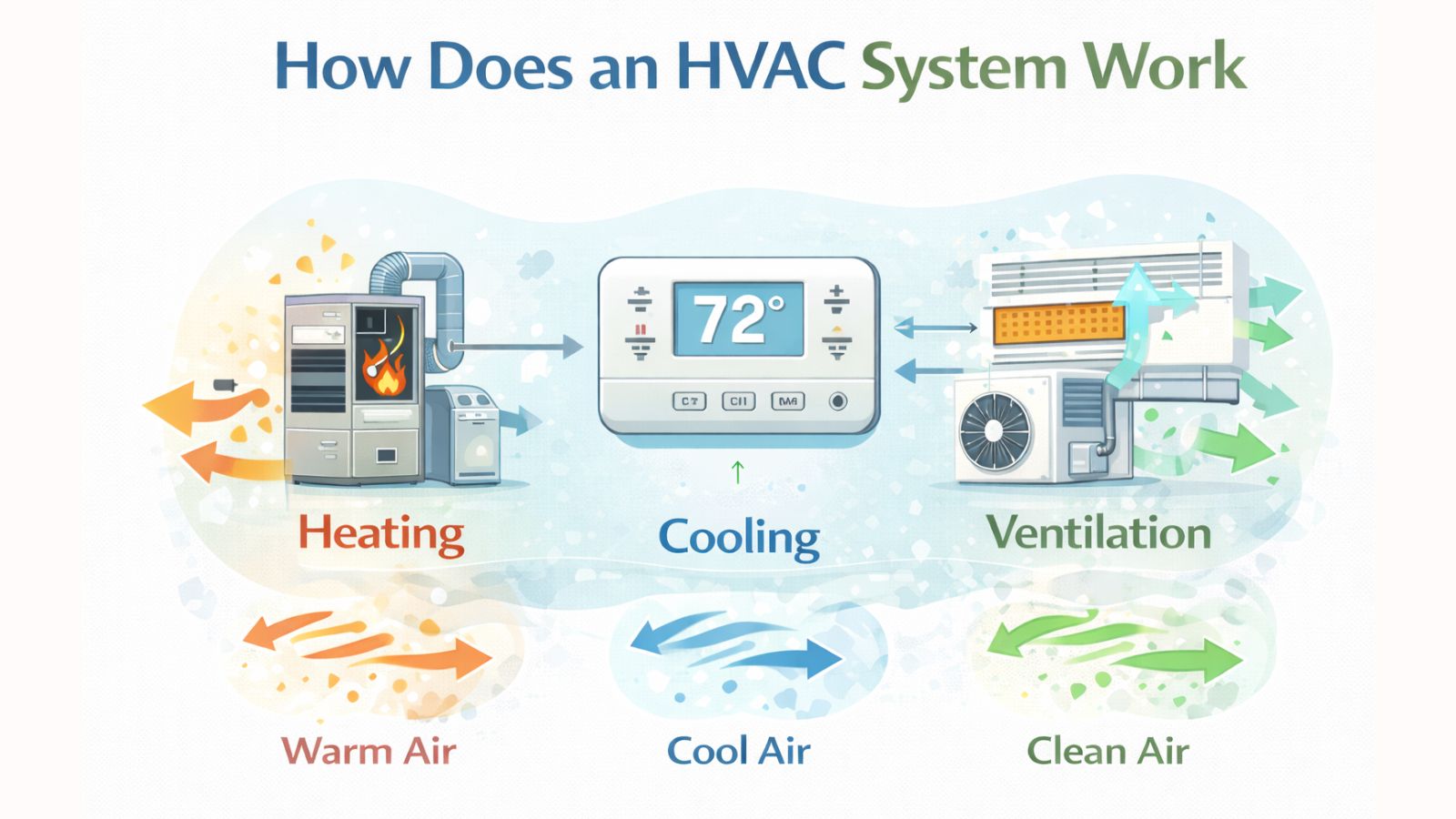
HVAC systems work by heating, cooling, and moving air to keep indoor spaces comfortable all year. The thermostat controls the system and decides when to turn heating or cooling on.
When it is cold, a furnace or heat pump creates warm air, and a fan pushes it through ducts into each room. When it is hot, the air conditioner removes heat from the indoor air and sends cool air back inside. At the same time, ventilation keeps the air fresh by bringing in clean air and removing stale air. The different grades of filter in the system trap dust and other air borne pollutants. HVAC uses nearly 40% of energy in commercial buildings, making it the biggest driver of operational energy demand and costs.
What Is an HVAC System?
An HVAC system is a special machine that keeps the air inside your home or building comfortable and healthy. The HVAC stands for:
- H – Heating
- V – Ventilation
- AC – Air Conditioning
So, an HVAC system does three main jobs:
- Heats the air when it’s cold outside
- Cool air when it’s hot outside
- Moves fresh air in and old air out
People use HVAC systems in:
- Homes
- Schools
- Offices
- Hospitals
- Shopping malls
How Does a HVAC System Work?
An HVAC system controls temperature and airflow using a thermostat to heat, cool, and circulate fresh air year-round.
Heating – Warm When It’s Cold
Heating keeps your indoor space comfortable during winter. When the temperature drops, your HVAC system quickly responds to maintain warmth.
How Heating Works Step by Step:
- The thermostat detects that the room temperature is lower than your set level.
- It sends a signal to the furnace or heat pump to turn on.
- The furnace burns fuel (like gas) or uses electricity to generate heat.
- A blower fan pushes warm air through ducts.
- Warm air flows out through vents into every room.
A heat pump works slightly differently. Instead of creating heat, it pulls heat from outside air (even in cold weather) and transfers it indoors.
According to the U.S. Department of Energy, heating uses about 29% of the total energy in an average U.S. home. The thermostat acts like the brain of the HVAC system. It constantly monitors temperature and tells the system when to start or stop heating.
Cooling – Cool When It’s Hot
Cooling keeps your indoor air fresh and comfortable during hot weather. Many people think air conditioners “create cold air,” but they actually remove heat from indoor air.
How Cooling Works Step by Step:
- The thermostat senses that the room feels too warm.
- It activates the air conditioning system.
- Warm indoor air gets pulled into the system.
- The air passes over coils filled with refrigerant.
- The refrigerant absorbs heat from the air.
- The system moves that heat outside through the outdoor unit.
- Cool air flows back into your rooms through ducts.
This process repeats until the room reaches your desired temperature.
Proper cooling and ventilation help control humidity and reduce mold growth. Efficient cooling systems reduce both electricity bills and environmental impact.
Ventilation – Clean and Fresh Air All the Time
The U.S. Environmental Protection Agency (EPA) states that indoor air can be 2 to 5 times more polluted than outdoor air. Ventilation keeps air moving and prevents it from becoming stale. Without ventilation, indoor air would feel stuffy and unhealthy.
What Ventilation Does:
- Brings outdoor air inside and treats it
- Pushes stale indoor air outside
- Removes odors and pollutants
- Controls moisture levels
- Filters dust, pollen, and harmful particles
Air passes through filters before circulating through the building. These filters trap dust, bacteria, and other airborne particles.
Modern commercial buildings often improve ventilation systems to enhance indoor air quality while reducing energy waste. Advanced HVAC enhancement systems, like those used in commercial buildings, help improve airflow and remove airborne contaminants without overloading energy consumption.
Why Is HVAC Efficiency Important
HVAC systems use a large amount of energy.
- The U.S. Department of Energy reports that heating and cooling account for about 43% of energy use in U.S. homes.
- In commercial buildings, HVAC systems can consume nearly 40% of total energy.
Improving efficiency helps:
- Lower energy bills
- Reduce carbon emissions
- Improve air quality
- Extend system life
HVAC Systems in Commercial Buildings
Large buildings like offices, schools, and hospitals need advanced HVAC solutions.
Commercial systems must:
- Handle larger spaces
- Maintain consistent airflow
- Control indoor air quality
- Reduce energy costs
Therefore, solutions like Rensair solutions for HVAC systems for commercial buildings help you.
Rensair systems work alongside existing HVAC setups to:
- Improve air purification
- Reduce airborne contaminants
- Lower HVAC energy demand
- Increase airflow efficiency
Instead of replacing the entire HVAC system, Rensair technology upgrades performance while supporting energy savings. This makes it ideal for offices, educational facilities, healthcare buildings, and retail spaces.
Conclusion
HVAC systems do far more than heat and cool a building—they play a vital role in indoor air quality, occupant comfort, energy efficiency, and overall building performance. Since HVAC accounts for nearly 40% of energy use in many commercial buildings, even small improvements in system efficiency can deliver significant savings while supporting healthier indoor environments.
Rather than replacing existing HVAC infrastructure, building owners and facility managers can enhance its performance with smart technologies. Solutions like Rensair’s HVAC enhancement technology improve air purification, reduce airborne contaminants, optimise ventilation, and lower HVAC energy demand—all while helping organisations meet their sustainability and operational goals.
Whether you manage an office, hospital, school, or commercial property, understanding how your HVAC system works is the first step towards creating healthier, more energy-efficient buildings.
Frequently Asked Questions
HVAC is better because it provides heating, cooling, and ventilation, while an AC system only cools indoor air during hot weather.
An HVAC split system uses separate indoor and outdoor units to heat or cool air, then distributes it through ducts.
A commercial HVAC system controls heating, cooling, and ventilation in large buildings using powerful equipment and advanced airflow management systems.
The purpose of an HVAC system is to maintain comfortable temperatures, improve air quality, and ensure proper airflow indoors year-round.