


How Smart Technology Makes Air Purifiers More Energy Efficient
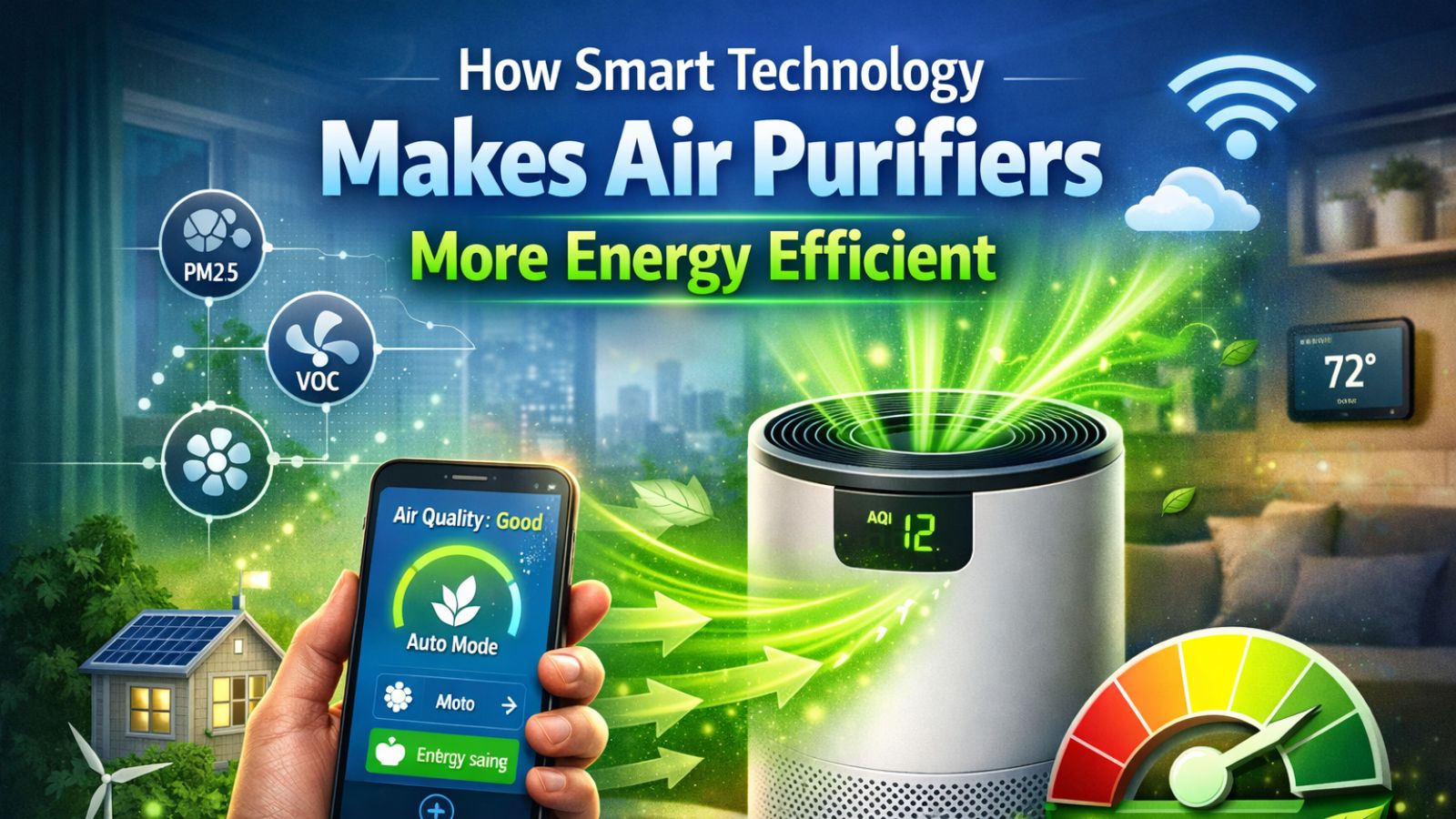
Clean indoor air is essential for our health, comfort and productivity, especially inside our homes & offices where we spend most of the time. Air purifiers play an important role in removing dust, allergens, smoke, and harmful pollutants, but many traditional models come with a hidden downside: they run continuously, consuming large amounts of electricity even when the air is already clean.
As energy costs rise and sustainability becomes a priority, running an air purifier 24/7 doesn’t make sense. This is where smart technology changes the game. Modern smart air purifiers use real-time tools like sensors, automation, and apps to run only when needed.
In this blog, we’ll break down exactly how smart technology makes air purifiers more energy efficient, exploring the features that cut power use, lower running costs, and help homes and offices stay clean, comfortable, and environmentally responsible.
Why Energy Efficiency Matters in Air Purifiers
Energy efficiency means doing more with less power. Traditional air purifiers run all the time, even when the air is already clean. Over time, this can lead to high electricity bills and greater harm to the environment. That’s why smart purifiers are a better choice.
How smart technology makes air purifiers more energy efficient is by adjusting their work to match the air quality.
Common Problems with Old Air Purifiers:
- Always on, even when not needed
- Higher electricity bills
- Filters get used up faster
- Not good for green homes
Switching to smart technology helps save money and supports eco-friendly living.
Smart Sensors
Smart sensors are like the purifier’s brain. They detect pollution, dust, smoke, and bad chemicals in the air. These sensors tell the purifier when to turn on, how hard to work, and when to rest. That’s one big way how smart technology makes air purifiers more energy efficient.
PM2.5 sensors measure tiny dust particles, while VOC sensors catch harmful gases. When the air is clean, the purifier slows down or stops. When it’s dirty, it speeds up. This saves energy and keeps the air clean.
What Smart Sensors Track:
- Fine dust (PM2.5)
- Smoke and allergens
- VOCs (Volatile Organic Compounds)
- Changes in air quality over time
This smart control reduces energy use by preventing overuse.
Adaptive Fans & Motors That Use Less Power
Traditional fans run at one speed fast. That means they use the same amount of electricity all the time. Smart purifiers use brushless DC motors and adaptive fans. These change speed based on what the air needs. This is another key way smart technology makes air purifiers more energy efficient.
These fans move more air using less power. That means cleaner air with less noise and lower energy costs. Users report lower electric bills after switching to smart fan models.
Smart Motor Benefits:
- Less power is needed per minute
- Adjusts airflow automatically
- Quiet and smooth operation
- Longer device lifespan
This saves energy while keeping your indoor air fresh.
Intelligent Controls and Smart Automation
Smart air purifiers can connect to apps on your phone. You can turn them on or off, set schedules, or even use voice commands. This helps you control energy use from anywhere.
Many smart models work with Google Home, Alexa, or other smart devices. You can link them to your thermostat or use timers to run only when you’re present.
Features of Smart Controls:
- Control from your phone
- Set daily or weekly schedules
- Voice commands
- Smart-home syncing
This kind of smart automation gives you more control and more savings.
Smarter Filters With Less Resistance
Filters catch dust, allergens, and germs. But thick filters can block airflow, making the motor work harder. That uses more power. Smart air purifiers use filters designed to balance strength and airflow. This shows another way how smart technology makes air purifiers more energy efficient.
HyperHEPA filters, trap very small particles while still letting air move easily. Sensors monitor filter health and remind you when to change them. This keeps the purifier running smoothly and efficiently, without wasting power or using the fan more than needed.
Smart Filter Features:
- Tracks filter life
- Uses high-performance material
- Balances airflow and power use
- Works with sensors to reduce waste
Using the right filter saves electricity and keeps the air clean longer.
HVAC Integration – Smart Air for the Whole Home & Offices
Many smart air purifiers are now part of home & office HVAC systems. These central systems clean the air while heating or cooling the room. This is how smart technology makes air purifiers more energy efficient, by using one large purifier instead of several small ones.
A study from ScienceDirect showed that smart HVAC-connected purifiers reduced energy use in large rooms by optimising ventilation. Instead of running 24/7, these purifiers work only when needed. They can also measure air in different rooms and adjust airflow in real-time.
HVAC Smart Features:
- Cleans multiple rooms at once
- Adjusts air settings per room
- Links with thermostats and sensors
- Uses one fan instead of many
This reduces overall energy usage and keeps the entire home’s & offices’ air fresh.
Energy Ratings & How to Choose Efficient Models
Buying a purifier with a good energy rating helps save power. Look for Energy Star-certified models. These are tested to use less energy while still cleaning well. Checking this is another step in learning how smart technology makes air purifiers more energy efficient.
Clean Air Delivery Rate (CADR) per watt is also important. This number tells you how much clean air you get for each unit of power used. Higher CADR per watt = better performance. ENERGY STAR and Woman & Home recommend using these numbers when comparing models.
Everyday User Tips for Better Energy Efficiency
Even the smartest purifier needs some help from you. Simple habits can help lower electricity use and make your purifier last longer. When used correctly, these tips show exactly how smart technology makes air purifiers more energy efficient and easy to manage at home.
Use the right purifier size for your room. Clean or change filters when the app says it’s time. Place the purifier away from the walls for better airflow. Always turn on Auto Mode so it only works when needed. These tips save energy and improve performance.
User Energy-Saving Checklist:
- Choose the right sized purifier
- Keep filters clean or replace them on time
- Use Auto Mode or Eco Mode
- Use scheduling or phone control
- Keep the purifier away from walls and furniture
These small steps can lower power use by 30–50%, according to Tom’s Guide.
Smart Features That Save Energy
| Smart Feature | Energy Benefit |
| Smart Sensors | Detect when cleaning is needed |
| Adaptive Fans & Motors | Reduce power use during clean air cycles |
| App Control | Prevent waste while you’re away |
| Filter Tracking | Avoid fan overuse and early filter changes |
| HVAC Integration | Clean more with one central smart system |
| Energy Ratings | Pick models proven to save power |
Conclusion – Clean Air With Less Energy
Smart technology is changing the way we clean the air in our homes & offices. Traditional air purifiers run all the time and use more electricity than needed. But smart air purifiers adjust automatically, saving power and money.
With features like sensors, adaptive fans, and app control, these devices only work when the air truly needs cleaning. That’s the core of how smart technology makes air purifiers more energy efficient.
They also track filter usage, learn your habits, and even connect to other smart devices. This makes them easier to use and better for the environment.
If you want clean air without high energy bills, Rensair’s smart air purifier is a smart choice.
Start small, choose a model with sensors and Auto Mode. Over time, these features will help you breathe easier and save more energy and money.
Frequently Asked Questions
They use smart sensors to detect air quality and adjust fan speed, running only when needed, which significantly reduces power use.
Key technologies include PM2.5 and VOC sensors, DC motors, adaptive fans, smart automation, and efficient HEPA or HyperHEPA filters.
Effective purifiers combine high-performance filters to trap fine particles and harmful gases with sensors that optimise airflow based on actual air quality.
They monitor pollutants in real-time, automatically adjusting operation via app controls or voice commands, using adaptive fans and sensors to save energy while purifying air.