


NHS Energy Saving Ventilation Solutions
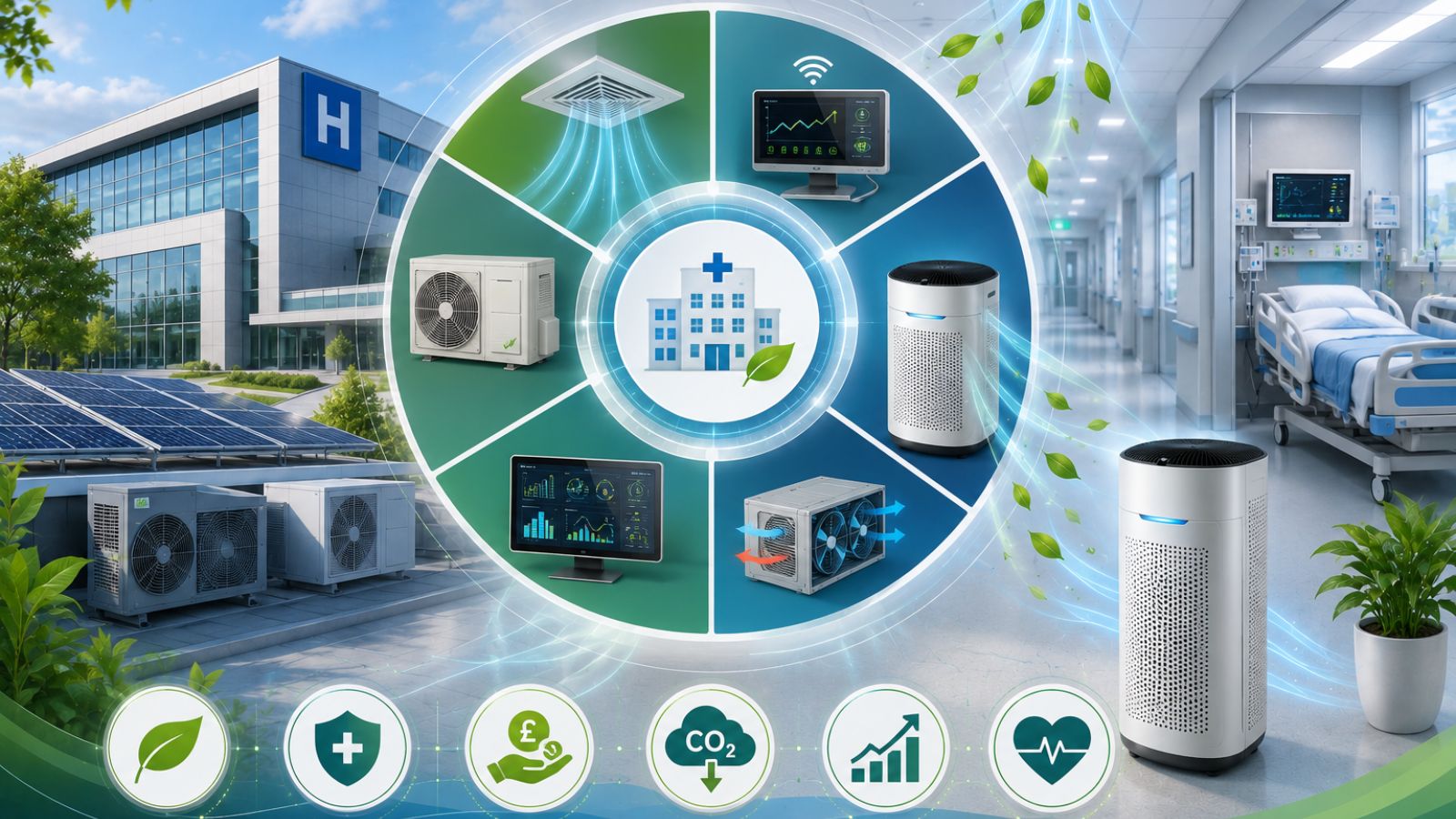
NHS hospitals use ventilation systems all day to keep indoor air clean and safe for patients and staff. This is especially important in operating theatres, wards, and isolation rooms under HTM 03-01 standards.
But running HVAC and ventilation systems 24/7 uses a lot of energy. Older NHS buildings often have outdated systems that increase energy costs and carbon emissions.
To support NHS Net Zero goals, hospitals are now focusing on energy-efficient ventilation solutions. These systems help reduce energy waste while maintaining safe indoor air quality.
Solutions like smart ventilation controls, heat pumps, HEPA air purification, and heat recovery systems are helping NHS facilities improve efficiency and lower operational costs.
This blog explains the best energy-saving ventilation solutions used across NHS healthcare buildings in the UK.
Why NHS Ventilation Needs an Energy Overhaul
NHS hospitals must maintain safe indoor air quality at all times to support infection control and patient safety. Areas like operating theatres and treatment rooms follow strict ventilation standards under HTM 03-01.
However, running ventilation and HVAC systems 24/7 uses a large amount of energy. Many NHS buildings also rely on old infrastructure and inefficient heating and cooling systems, leading to higher energy costs and carbon emissions.
Common Challenges NHS Buildings Face
- High energy consumption
- Ageing HVAC infrastructure
- Rising operational costs
- Increased carbon emissions
- Continuous ventilation demand
To meet Net Zero goals by 2040, the NHS is investing in energy-efficient ventilation, smart HVAC systems, and modern air purification solutions.
6 Key Energy-Saving Ventilation Solutions for the NHS
Here are the most impactful ventilation strategies currently being adopted by NHS trusts across England.
1. Demand Controlled Ventilation (DCV)
Traditional ventilation systems often run at full speed all day, even when rooms are empty. Demand Controlled Ventilation (DCV) works smarter by adjusting airflow based on room conditions.
These systems use sensors to monitor:
- CO₂ levels
- Room occupancy
- Temperature
- Indoor air quality
For example, ventilation increases when a hospital ward becomes busy and reduces during quieter hours. This helps lower unnecessary energy use.
Benefits of DCV
- Reduces energy consumption
- Improves indoor comfort
- Optimises HVAC performance
- Lowers operational costs
Well-designed DCV systems can reduce ventilation energy use by up to 40%.
Rensair Smart Ventilation Solutions also support smart air quality management by connecting portable air purifiers with existing HVAC systems for real-time airflow control.
2. Heat Pump Integration
Heat pumps are becoming an important solution for NHS energy reduction. Unlike traditional gas boilers, heat pumps use energy from the air, ground, or water to provide heating and cooling more efficiently.
They can deliver several units of heat while using much less electricity.
Benefits of Heat Pumps
- Lower carbon emissions
- Reduced heating costs
- Better energy efficiency
- Supports NHS Net Zero goals
Many NHS hospitals are already installing heat pump systems as part of large decarbonisation projects.
Heat pumps work even better when combined with efficient ventilation and air purification systems because the building requires less constant airflow and heating demand.
3. Portable HEPA Air Purification
Many older NHS buildings struggle to meet modern ventilation requirements because upgrading ductwork and HVAC systems can be expensive and difficult.
Portable HEPA air purifiers provide a fast and cost-effective solution.
These systems use H13 HEPA filters to remove:
- Dust
- Bacteria
- Viruses
- Mould spores
- Fine airborne particles
Benefits of Portable Air Purifiers
- Easy to install
- No major building work required
- Improves indoor air quality
- Supports infection control
- Reduces pressure on central HVAC systems
Rensair HEPA Air Purifiers combine H13 HEPA filtration with UV-C technology to help reduce airborne pathogens in healthcare environments.
4. Heat Recovery Ventilation (HRV)
Hospitals lose a large amount of energy when warm indoor air is removed and replaced with cold outdoor air.
Heat Recovery Ventilation (HRV) systems help reduce this energy loss by reusing heat from outgoing air to warm incoming fresh air.
Benefits of HRV Systems
- Lower heating costs
- Reduced energy waste
- Better indoor comfort
- Improved ventilation efficiency
They are especially useful in healthcare areas that require continuous airflow and high air change rates.
Many modern NHS buildings now include HRV systems as part of their ventilation design.
5. Building Energy Management Systems (BEMS)
A Building Energy Management System (BEMS) helps hospitals monitor and control building systems from one central platform.
It can manage:
- Ventilation
- Heating
- Cooling
- Lighting
- Energy use
Modern BEMS platforms use real-time data to improve building performance and reduce unnecessary energy consumption.
Benefits of BEMS
- Better energy control
- Reduced operational costs
- Improved HVAC efficiency
- Real-time monitoring
- Predictive maintenance support
Rensair Cloud Platform can integrate with HVAC and BEMS systems to provide live indoor air quality monitoring across healthcare facilities.
6. Renewable Energy Integration and Solar PV
Many NHS facilities are now using solar energy to reduce electricity costs and support sustainability goals.
Solar photovoltaic (PV) panels generate electricity that can help power:
- Ventilation systems
- HVAC equipment
- Heating and cooling systems
When combined with battery storage, hospitals can store extra solar energy and use it later when needed.
Benefits of Solar Energy in NHS Buildings
- Lower electricity bills
- Reduced carbon emissions
- Cleaner energy supply
- Reduced reliance on the power grid
Several NHS hospitals have already installed large solar energy systems to support energy-efficient healthcare operations and reduce long-term operating costs.
How Rensair’s Smart Demand Controlled Ventilation Works
Rensair improves hospital ventilation without replacing existing HVAC systems. Instead, it adds smart air purification and real-time monitoring to help NHS facilities reduce energy use while maintaining clean indoor air.
Step 1: Install Smart Air Purifiers
Rensair Air Purifiers are placed in areas like:
- Wards
- Treatment rooms
- Waiting areas
- Dental clinics
Each unit uses H13 HEPA filtration and UV-C technology to clean indoor air and reduce airborne contaminants locally.
Step 2: Connect Through Rensair Cloud
All devices connect to the Rensair Cloud Platform, which monitors indoor air quality in real time across the facility.
The system can integrate with existing Building Management Systems (BMS) to help hospitals manage ventilation more efficiently.
Step 3: Optimize HVAC Automatically
The system uses occupancy and air quality data to adjust ventilation levels automatically.
- Ventilation reduces when rooms are empty
- Airflow increases when occupancy rises or air quality drops
This helps lower unnecessary HVAC energy use while maintaining safe indoor air conditions.
Real-World NHS Energy Saving in Action
Many NHS trusts across the UK are already investing in energy-efficient ventilation, heating, and building technologies to reduce operational costs and carbon emissions.
These projects show how hospitals can improve sustainability while maintaining safe and comfortable healthcare environments.
Imperial College Healthcare NHS Trust
As part of a £120 million decarbonisation programme, Imperial College Healthcare has installed air source heat pumps, improved insulation and cooling systems, and upgraded energy controls across Charing Cross and Hammersmith Hospitals.
The result: a 27% reduction in building energy greenhouse gas emissions at Charing Cross in a single year. The Trust has secured a total of £47.4 million in Public Sector Decarbonisation Scheme grants since 2021, and projects an overall 43% reduction in emissions from heating, cooling, and powering its estate once the full programme is complete.
Royal Shrewsbury Hospital
In June 2025, Royal Shrewsbury Hospital broke ground on a £16.2 million project funded through the Public Sector Decarbonisation Scheme.
The project will replace old steam boilers and gas-fired equipment with a 1.6MW air and water source heat pump system, install rooftop solar panels, upgrade building energy management systems, improve roof and pipework insulation, and replace air handling unit fans with low-energy alternatives.
The Trust estimates the project will save approximately £1 million a year in energy costs and cut the site’s carbon footprint by over 3,000 tonnes annually.
Conclusion
Energy-efficient ventilation is becoming essential for NHS healthcare facilities. Hospitals must maintain safe indoor air quality while also reducing rising energy costs and carbon emissions.
Solutions like smart ventilation systems, heat pumps, HEPA air purification, heat recovery systems, and renewable energy can help NHS buildings improve efficiency without compromising patient safety.
Frequently Asked Questions
NHS hospitals use HVAC systems, HEPA filtration, pressure-controlled ventilation, and air purification technologies to maintain safe indoor air quality and support infection control.
NHS facilities can reduce energy costs by using smart ventilation controls, heat recovery systems, energy-efficient HVAC equipment, and portable HEPA air purification solutions.
Yes. Portable HEPA air purifiers help improve indoor air quality, reduce airborne contaminants, and support infection prevention in healthcare environments.
HTM 03-01 is NHS guidance for the design, operation, and maintenance of ventilation systems in healthcare buildings. It helps ensure safe and effective indoor air management.