


How to Reduce Building Energy Bills with Smart Air Purification
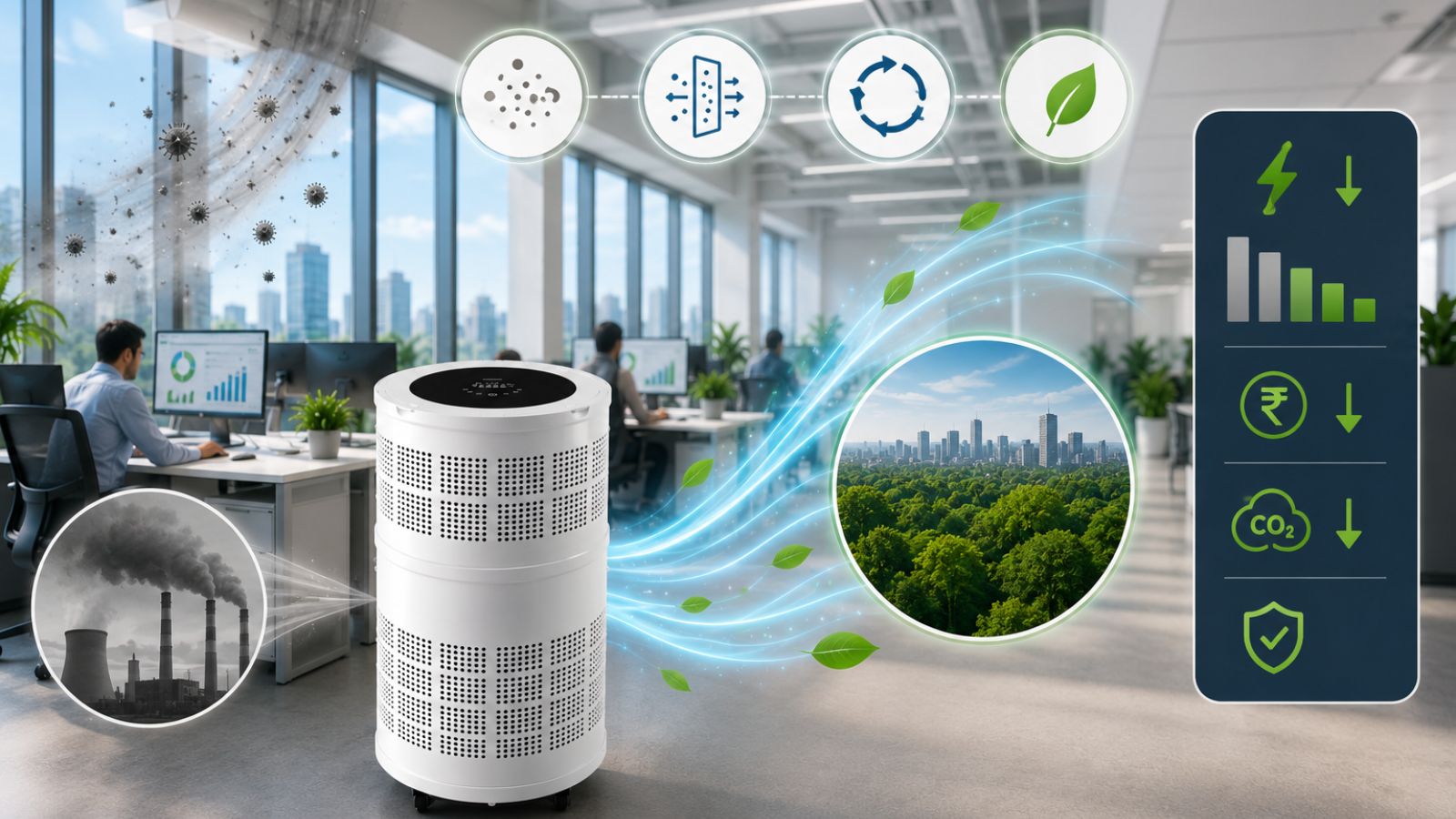
Reducing building energy bills is a priority for many businesses facing rising operating costs. Since HVAC and ventilation systems consume a large amount of energy, improving their efficiency can lead to significant savings.
Smart air purification helps by cleaning and recirculating indoor air, reducing the need for excessive outdoor ventilation. This lowers the energy required for heating, cooling, and air treatment.
With advanced technologies such as HEPA filtration, UVC purification, and smart ventilation controls, buildings can maintain healthy indoor air quality while reducing energy consumption and supporting sustainability goals.
The Hidden Energy Drain in Your Building
HVAC systems are one of the biggest sources of energy use in commercial buildings. Traditional ventilation systems bring in large amounts of outside air to maintain indoor air quality.
However, this process consumes a lot of energy because the air must be heated, cooled, or dehumidified before use.
Common Problems with Traditional Ventilation
- Runs at fixed levels even when buildings are not fully occupied
- Wastes energy by treating unnecessary outside air
- Increases electricity and operating costs
People spend most of their time indoors, where air quality can often be worse than outside air. Instead of relying only on heavy ventilation, modern buildings now use smarter indoor air quality solutions.
A Smarter Solution
Modern air purification systems help clean and recycle indoor air, reducing the need for excessive outdoor ventilation. This helps:
- Lower HVAC energy consumption
- Reduce building energy bills
- Improve indoor air quality
- Support energy-efficient building operations
Smart Demand Controlled Ventilation (SDCV)
Smart Demand Controlled Ventilation (SDCV) is a modern way to reduce building energy costs. Instead of running ventilation systems at full power all the time, SDCV adjusts airflow based on real-time indoor air quality and the number of people inside the building.
Rensair uses a patented technology that combines air purification with ventilation. This helps buildings maintain clean and healthy indoor air while reducing the need for excessive mechanical ventilation.
Benefits of SDCV
- Reduces ventilation energy costs by at least 40%
- Lowers carbon emissions
- Maintains indoor air quality standards
- Uses up to 9× less energy per m³ of air compared to traditional HVAC ventilation
- Helps improve HVAC efficiency without major system upgrades
By cleaning and recirculating indoor air more efficiently, SDCV helps buildings save energy and operate more sustainably.
SDCV works with your existing HVAC system, so there is no need for expensive system replacement. Sensors placed throughout the building continuously monitor indoor air quality, including CO₂ levels, dust particles, and harmful gases (VOCs).
HEPA & UVC Air Purification Helps Reduce HVAC Load
High-efficiency air purifiers do more than clean indoor air. They also help reduce the workload on HVAC systems. When indoor air is continuously cleaned and recirculated, the ventilation system does not need to work as hard to maintain healthy air quality. This can help reduce energy use, lower operating costs, and extend HVAC equipment life.
Rensair Air Purifiers use advanced hospital-grade air purification technology. This includes:
H13 HEPA Filtration
The H13 HEPA filter removes at least 99.97% of airborne particles as small as 0.3 microns, including:
- Dust
- Allergens
- Mould spores
- Bacteria
- Viruses
Its cylindrical filter design increases surface area for better air cleaning performance.
Germicidal UVC Light
An ozone-free UVC light is placed inside the filter system to help deactivate trapped viruses and bacteria, including coronavirus-type pathogens.
High Air Cleaning Capacity
A single Rensair unit can process up to 600 m³ of air per hour, making it suitable for large commercial spaces. Its 360-degree airflow design helps distribute clean air evenly throughout the room, regardless of where the unit is placed.
Occupancy-Based Ventilation Management
One of the best ways to reduce building energy costs is to match ventilation levels with the actual number of people inside a space.
For example, a meeting room used for only a few hours a day does not need the same airflow as a busy office area. However, many traditional HVAC systems run at the same level all day, wasting energy.
Our Smart Demand Controlled Ventilation (SDCV) system solves this problem by adjusting ventilation based on real-time occupancy and indoor air quality data.
How It Helps
- Reduces ventilation during low occupancy periods
- Increases airflow automatically when more people are present
- Lowers unnecessary energy consumption
- Maintains healthy indoor air quality
- Supports energy-efficient building management
This smart occupancy-based approach helps buildings reduce energy bills while meeting modern sustainability and green building standards.
Real-World Impact
Our SDCV systems have helped offices and universities reduce HVAC energy consumption while maintaining healthy indoor air quality standards.
By using smart ventilation and air purification together, these buildings were able to:
- Lower energy use
- Reduce operating costs
- Maintain clean indoor air
- Support sustainability and decarbonisation goals
This shows how smarter air quality management can improve both building efficiency and environmental performance.
IoT & Building Management System (BMS) Integration
Air purification and ventilation systems work more efficiently when connected to a building management system (BMS). When systems work together, buildings can reduce energy waste, improve indoor air quality, and manage operations more effectively.
Rensair Cloud is an IoT-based indoor air quality management platform that connects air purifiers with existing HVAC and BMS systems. It helps facility managers monitor and control indoor air quality from one central dashboard.
What Rensair Cloud Can Do
- Monitor real-time indoor air quality data, including CO₂, VOCs, and dust particles
- Track ventilation energy usage
- Control purifier operation remotely based on occupancy levels
- Generate energy and carbon emission reports for sustainability goals
- Use smart AI-based controls to optimise ventilation automatically
Benefits of Smart Integration
- Reduces unnecessary energy use
- Helps detect system issues early
- Supports preventive maintenance
- Improves HVAC efficiency
- Helps buildings meet ESG and sustainability targets
By using smart data and automation, buildings can continuously improve energy efficiency and reduce long-term operating costs.
Reducing Outside Air Conditioning Requirements
Buildings normally bring in outside air to maintain healthy indoor air quality. However, outside air must be heated in winter and cooled in summer before it can be used indoors. This increases HVAC energy consumption and operating costs.
ASHRAE Standard 62.1 allows buildings to reduce outside air intake if advanced air cleaning systems can maintain safe indoor air quality levels.
Rensair Air Purifiers help clean indoor air continuously by removing:
- Dust and fine particles
- Airborne pathogens
- VOCs and harmful gases
Because indoor air stays cleaner, buildings can reduce the amount of outside air needed without affecting indoor air quality standards.
Regular Maintenance & Filter Optimisation
Air purification systems work best when filters and components are properly maintained. Dirty or blocked filters make the system work harder, increasing energy use and reducing air cleaning performance.
A clogged HEPA filter can force the fan motor to use more electricity to move air through the system.
Important Maintenance Steps
- Replace HEPA filters regularly, usually every 12-18 months in commercial spaces
- Clean or replace pre-filters more often to protect the main filter
- Check UVC lamp performance and replace lamps when needed
- Use smart monitoring systems like Rensair Cloud for automatic maintenance alerts
- Keep HVAC coils, ducts, and fans clean to improve energy efficiency
Conclusion
Reducing building energy bills is no longer only about upgrading HVAC systems. Smart air purification solutions can also play an important role in improving energy efficiency and indoor air quality. Technologies like HEPA filtration, UVC purification, occupancy-based ventilation, and IoT monitoring help buildings reduce unnecessary energy use while maintaining clean and healthy indoor air.
Our air purification systems help businesses lower HVAC workload, reduce operating costs, and support sustainability goals. By combining smart ventilation with advanced air cleaning, buildings can create healthier, more energy-efficient indoor environments for the future.
Frequently Asked Questions
No, most modern air purifiers use very little electricity. They are designed to run efficiently and have a small impact on your monthly power bill.
There are very few downsides. If filters are not cleaned or replaced on time, the performance may reduce and energy use may increase slightly.
Yes, air purifiers are safe to use every day. In fact, continuous use helps maintain better indoor air quality, especially in polluted or closed spaces.
Clean energy sources like solar or wind reduce dependence on expensive electricity from the grid. This helps households lower long-term energy costs and bills.