


5 Ways To Reduce Ventilation Energy Costs Without Replacing Your HVAC
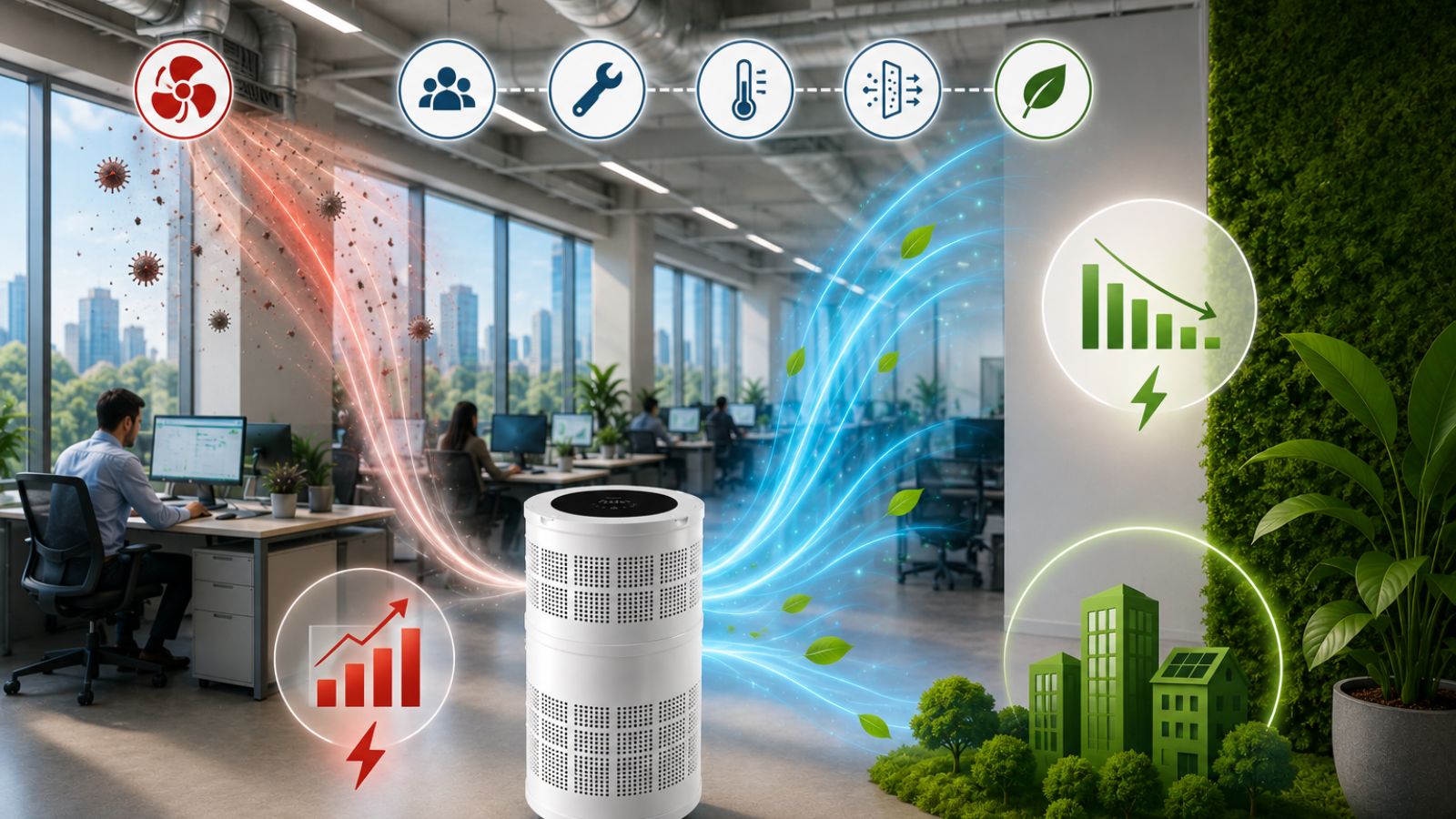
Ventilation systems are necessary for clean and healthy indoor air, but they can also increase energy costs if they run inefficiently. Many buildings use more ventilation energy than actually needed.
The good thing is that reducing HVAC energy costs does not always require a full system replacement. Small improvements can make a big difference in performance and efficiency.
Using smart HVAC controls, regular maintenance, demand-based ventilation, and air purification can help lower energy bills and reduce unnecessary energy use.
These simple strategies help businesses improve indoor comfort, maintain better air quality, and reduce operational costs without replacing their existing HVAC system.
Why Ventilation Costs So Much
HVAC systems can use up to 50% of the total energy in a commercial building. A large part of this energy is used for ventilation, bringing fresh air inside, moving air through the building, and removing stale air.
Many older HVAC systems work at the same speed all day, no matter how many people are in the building. For example, the system may use the same amount of energy for an almost empty office on Friday afternoon as it does for a crowded meeting room on Monday morning.
This leads to over-ventilation, where buildings heat, cool, filter, and move more air than necessary. As a result, energy bills increase unnecessarily.
1. Use Demand-Controlled Ventilation (DCV)
One of the best ways to reduce HVAC energy costs without replacing the entire system is by using Demand-Controlled Ventilation (DCV).
Traditional HVAC systems usually run at a fixed ventilation rate all day, even when only a few people are inside the building. This wastes energy because the system continues heating, cooling, and circulating more air than needed.
DCV solves this problem by adjusting airflow based on real-time occupancy.
Benefits of Demand-Controlled Ventilation
- Reduces unnecessary energy use
- Lowers heating and cooling costs
- Improves ventilation efficiency
- Maintains better indoor air quality
- Reduces HVAC system workload
- Helps lower carbon emissions
Energy Savings From DCV
Research published on ScienceDirect shows that Demand-Controlled Ventilation can reduce ventilation-related energy costs by 25% to 41%, depending on the building type and occupancy patterns.
On average, commercial buildings can achieve around 38% energy savings by using DCV.
Buildings with changing occupancy levels often see the biggest benefits, including:
- Hotels and hospitality spaces
- Conference and event centres
- Schools and universities
- Office buildings
- Commercial facilities with flexible working hours
By using smarter ventilation control, businesses can significantly reduce energy costs without replacing their existing HVAC system.
2. Maintain Your HVAC System Regularly
Regular HVAC maintenance may seem simple, but it is one of the most effective ways to reduce ventilation energy costs. A properly maintained HVAC system can operate 10% to 25% more efficiently compared to a poorly maintained system.
Here are some important maintenance steps that help improve ventilation efficiency and lower energy bills.
Replace Air Filters Regularly
Air filters should usually be replaced every 30 to 90 days, depending on building usage and air quality conditions.
Benefits of replacing filters regularly:
- Improves airflow
- Reduces fan energy use
- Improves indoor air quality
- Extends HVAC system life
This is one of the simplest and most cost-effective maintenance tasks.
Clean Evaporator and Condenser Coils
Dirty coils reduce the system’s ability to transfer heat efficiently. As a result, the HVAC system consumes more energy to maintain the desired temperature.
Research published on ScienceDirect found that proper HVAC cleaning can reduce fan and blower energy use by 41% to 60%.
Cleaning coils helps:
- Improve cooling efficiency
- Reduce energy consumption
- Lower system workload
- Improve overall HVAC performance
Inspect and Seal Ductwork
Leaky ducts can waste a large amount of conditioned air before it reaches occupied spaces.
Studies show that duct leaks can cause up to 25% air loss, leading to higher heating and cooling costs.
Sealing duct leaks helps:
- Prevent energy waste
- Improve airflow distribution
- Reduce HVAC operating costs
- Maintain consistent indoor temperatures
Small repairs in ductwork can create noticeable energy savings over time.
Check Refrigerant Levels and Thermostat Settings
Incorrect refrigerant levels force compressors to work harder, reducing HVAC efficiency and increasing energy use.
Regular checks help:
- Improve cooling performance
- Reduce unnecessary system operation
- Lower monthly energy bills
- Prevent equipment damage
Schedule Professional HVAC Inspections
According to the U.S. Department of Energy businesses that follow proper HVAC maintenance practices can reduce annual energy costs by 5% to 30%.
Professional inspections can identify hidden issues such as:
- Refrigerant leaks
- Electrical problems
- Motor wear
- Sensor failures
- Airflow imbalances
Fixing small problems early helps avoid expensive repairs and improves long-term system efficiency.
3. Use Smarter HVAC Controls and Scheduling
Many commercial buildings run their ventilation systems at the same speed throughout the day, even when some areas are empty or occupancy is low. In some cases, HVAC systems continue running at full capacity even after business hours.
Using smarter HVAC controls and scheduling can help reduce this unnecessary energy use without replacing the existing system.
Use Programmable or Smart Thermostats
Programmable and smart thermostats allow businesses to automatically adjust heating, cooling, and ventilation based on building usage.
For example, airflow and temperature settings can be reduced:
- During nights
- On weekends
- During holidays
- In low-occupancy periods
Benefits of Smart Thermostats
- Reduces unnecessary HVAC operation
- Lowers heating and cooling costs
- Improves energy efficiency
- Automates temperature control
- Reduces energy waste during non-working hours
Zoning Your Building
Many buildings treat the entire property as one ventilation zone. This often wastes energy because different areas usually have different occupancy levels and ventilation needs.
Zoning helps solve this problem by controlling airflow separately in different parts of the building.
Benefits of HVAC Zoning
- Reduces unnecessary ventilation
- Improves occupant comfort
- Lowers energy bills
- Improves airflow control
- Supports better indoor air quality
4. Use Air Purification to Support Ventilation
One effective way to reduce ventilation energy costs is by adding high-performance air purification systems alongside your existing HVAC setup.
Air purification helps reduce this energy load by improving indoor air quality directly inside the building.
Instead of depending only on fresh outdoor air to remove contaminants, air purifiers can capture:
- Dust and fine particles
- Bacteria
- Viruses
- Allergens
- Other airborne pollutants
As a result, buildings can maintain healthier indoor air while reducing the amount of outside air needed for ventilation.
How Rensair Supports Energy-Efficient Ventilation
Rensair uses an “HVAC: Hacked” approach designed to improve air quality and reduce energy consumption without requiring businesses to replace their existing HVAC infrastructure.
Instead of relying only on traditional ventilation, we combine:
- Smart Demand-Controlled Ventilation (SDCV)
- Advanced air purification
- Real-time indoor air quality monitoring
- Cloud-connected sensors and software
We focus on cleaning indoor air more efficiently so HVAC systems do not need to over-ventilate buildings unnecessarily.
According to Rensair, this helps buildings:
- Reduce ventilation energy consumption and carbon footprint
- Lower operational and HVAC running costs
- Maintain healthy indoor air quality
- Reduce pressure on mechanical ventilation systems
- Improve thermal comfort without major HVAC upgrades
The system works with existing HVAC setups, helping businesses improve efficiency without the high cost and disruption of replacing entire ventilation systems.
5. Conduct an Energy Audit First
Before upgrading your HVAC system, it is important to understand where energy is being wasted. An energy audit helps identify inefficiencies and shows which improvements can deliver the biggest savings.
Key Areas to Check During an Energy Audit
- Review utility bills: Look for unusual increases in energy use or HVAC systems running during low-occupancy periods.
- Identify hot and cold spots: Uneven temperatures may indicate duct leaks, airflow imbalance, or faulty thermostats.
- Check insulation quality: Poor insulation allows conditioned air to escape, forcing HVAC systems to work harder.
- Compare occupancy with ventilation rates: If ventilation runs at full capacity even when spaces are empty, Demand-Controlled Ventilation (DCV) could significantly reduce energy costs.
Benefits of an Energy Audit
- Reduces unnecessary energy use
- Improves HVAC efficiency
- Lowers operating costs
- Helps prioritize upgrades
- Improves indoor comfort
An energy audit provides a clear starting point for reducing ventilation energy costs without replacing your existing HVAC system.
Conclusion
Upgrading HVAC performance does not always require a full system replacement. By using smarter strategies like better maintenance, improved controls, demand-based ventilation, and energy auditing, buildings can significantly reduce energy use and operating costs.
These practical improvements increase efficiency while avoiding high capital expenses and disruption. With a data-driven approach, businesses can make existing HVAC systems work more effectively, ensuring better comfort, lower costs, and improved sustainability for the long term.
Frequently Asked Questions
Start with regular maintenance like cleaning filters, checking ducts, and scheduling inspections. These small steps improve efficiency quickly.
High energy bills, uneven room temperatures, and systems running even when spaces are empty are common signs of energy waste.
Yes, even small offices can reduce energy use by using smart thermostats, better scheduling, and proper maintenance.
Most systems should be checked at least twice a year, with filters replaced every 1 to 3 months depending on usage.
Yes, better insulation reduces heat loss or gain, helping the HVAC system use less energy to maintain temperature.
Yes, better airflow control and air purification can improve indoor air quality while reducing unnecessary energy use.