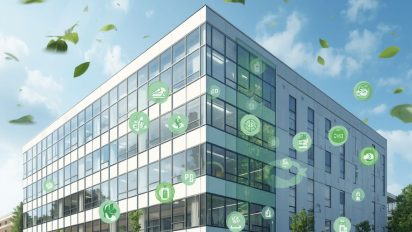
Introduction New York City, a vibrant metropolis known for its towering skyline and bustling life, faces a major environmental challenge: carbon emissions from buildings. Nearly 70% of the city’s carbon emissions stem from the fossil fuels used to power, heat, …
more In the wake of the COVID-19 pandemic, public health has become a serious priority, especially regarding the education system and in-person learning. …
more Yes, air purifiers can help reduce unpleasant odours in commercial properties, including offices, hotels, hospitals, and retail spaces. Air purifiers with activated carbon filters absorb odour-causing gases, while HEPA filters capture airborne particles. Choosing the right system and maintaining filters …
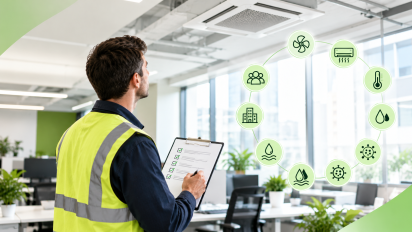
more Facility managers can check office indoor air quality by reviewing ventilation, CO₂, HVAC performance, filters, temperature, humidity, pollutants, moisture and occupant complaints. A simple IAQ checklist makes these checks easier to manage. It helps identify potential problems early and shows …
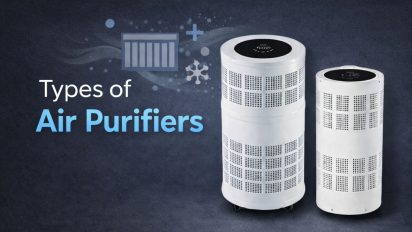
more There are 7 common types of air purifiers, including HEPA, activated carbon, UV-C, ioniser, ozone, PCO and smart air purifiers. Each technology targets different pollutants, so the right choice depends on what you want to remove from your indoor air. …
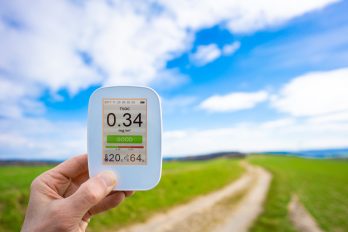
more Air pollution remains a concern across many parts of the UK. Based on 2025 PM2.5 data, Northampton had the highest annual average among the locations in the latest ranking, followed by Ipswich and St Albans. According to the Gov.UK, …
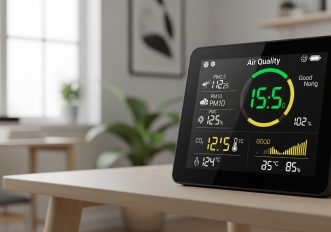
more TVOC air quality values show the total amount of VOCs in the air, which can come from things like paint, cleaning sprays, markers, glue, and new furniture. When the TVOC level is high, the air may be unhealthy and can …
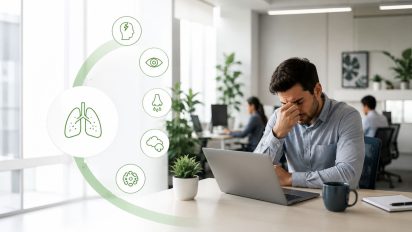
more Does your office often feel stuffy, or do employees regularly complain about headaches and tiredness? They could be signs of poor office indoor air quality. Since most people spend around eight hours a day at work, breathing clean air is …
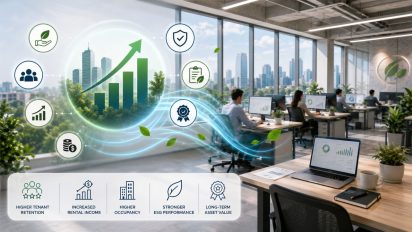
more Indoor air quality (IAQ) can increase commercial property value by improving tenant retention, supporting rental premiums, reducing vacancy risk, strengthening ESG performance, and increasing building attractiveness to long-term investors. As businesses place more importance on employee wellbeing, sustainability, and ESG …
more Air purifiers remove airborne pollutants, while humidifiers add moisture to dry air. The right choice depends on what you want to improve indoors. If you are comparing an air purifier vs humidifier, it is important to understand that these devices …
more Many people spend around 90% of their time indoors, whether at home, in the office, at school, or in other shared spaces. If you often notice stuffy rooms, lingering odours, frequent headaches, or allergy symptoms indoors, poor indoor air quality …
more Replacing an entire HVAC system can cost hundreds of thousands of pounds and disrupt building operations for months. Yet many commercial buildings can reduce HVAC energy consumption by 20–40% without replacing a single air handling unit. Many existing HVAC systems …
more Air pollution is one of the most serious environmental health risks, contributing to an estimated 28,000 to 36,000 deaths each year in the UK, according to a UK government study. It comes mainly from vehicle exhausts, industrial emissions, agriculture, and …
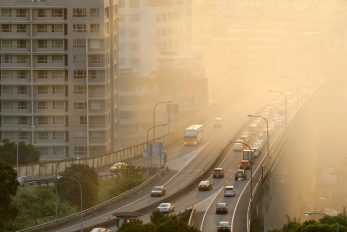
more Air pollution is one of the most serious environmental challenges we face today. In many cities, the air quality is so poor that breathing it can be harmful. People wear masks not only for health reasons but also to protect …
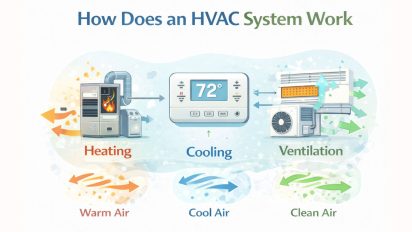
more HVAC systems work by heating, cooling, and moving air to keep indoor spaces comfortable all year. The thermostat controls the system and decides when to turn heating or cooling on. When it is cold, a furnace or heat pump creates …
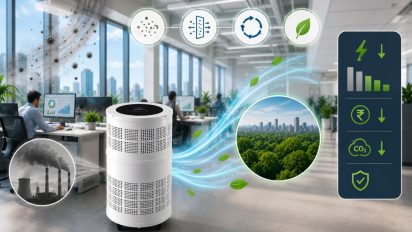
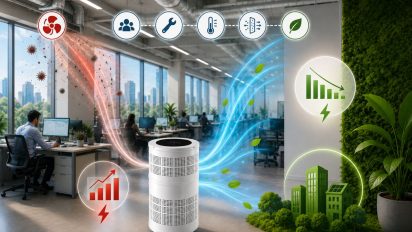
more Reducing building energy bills is a priority for many businesses facing rising operating costs. Since HVAC and ventilation systems consume a large amount of energy, improving their efficiency can lead to significant savings. Smart air purification helps by cleaning and …
more Ventilation systems are necessary for clean and healthy indoor air, but they can also increase energy costs if they run inefficiently. Many buildings use more ventilation energy than actually needed. The good thing is that reducing HVAC energy costs does …
more